illness

Navigate Healing With Loved Ones

6.7K views

How can you support the heroine in your life and navigate the healing process? Find your inner Chris Columbus.

Being ill is overwhelming. Anyone with ongoing illness is a heroine on an epic journey. This journey can be filled with plenty of bumps, roadblocks, U-turns, and forks (aka decision-making opportunities). There are some awe-inspiring moments as well.

Everyone’s experience of illness is different. Even heroines with the same diagnosis or symptom list will have different experiences of the illness or dis-ease; and the impact on their physical, emotional, mental and spiritual well being varies.

This unique journey your heroine is traveling is not a straight, engineered path moving from A to B to C, so this isn’t a process for a GPS-esque one-size-fits-most solution. The heroine needs a navigator. A valuable way to support the heroine in your life is to be her trusted navigator. Even Amelia Earhart had a navigator.

Because no two journeys are the same and there’s often uncharted territory, lists of things to do may or may not be relevant. No list can cover every circumstance. But anyone, in any situation can draw on inner resources and embody the characteristics of the navigator role. What navigator inspires you? Find a role model for yourself. As you support your heroine consider the traits of your role model and bring that essence into your being.

Here are a few ways to view this journey through the lens of a navigator and embrace your role in your heroine’s healing journey.

Identify the Destination

Most healing journeys have multiple destinations. Each encounter with a healthcare professional could be its own destination. There is the ultimate destination of well-being. The heroine determines the various destinations as the journey unfolds. Regardless of the destination, there are common characteristics to know you’re at a destination that supports your heroine. A destination that works:

  • Feels comfortable ‒ whatever comfortable means to the heroine
  • Strengthens and renews ‒ ultimately the destination is uplifting
  • Encompasses movement on some level ‒ stagnation is not OK

Discuss this with your heroine so you’ll know when you’re on course. If during an appointment the heroine is uncomfortable or not feeling understood, this is feedback that you’re off course.

Pay attention to when the destination shifts. For example, what starts as getting relief for physical pain could shift to identifying underlying emotional trauma that impacts true healing.

Scout the Landscape

Wow, where to start with so much landscape to cover in the world of health, healing and well-being? This is intertwined with knowing the destination. When the destination is relief from symptoms, the landscape could be anything from acupuncture, to dietary changes to pharmaceuticals. When the destination is eliminating the root cause, you’re likely in the territory of older traditions that have studied health for centuries: Naturopathic, Homeopathic, Chinese, or Ayurveda. Pay attention to the destination to know which direction to scout.

Regardless of the landscape, it is helpful to:

  • Curate information – narrow down the vast information into relevant pieces like a museum curator
  • Bring a sense of curiosity –  explore options, ask questions like a child
  • Transform barriers into paths – go above, around, through, or chart a new path; a roadblock may be a sign to shift direction

Map the Cairns

Cairns are stone towers that have marked important places and travel routes for centuries. Your heroine may be struggling just to feel “normal” and have some sort of normal life, and feel how she used to feel. Even people who avidly journal or meditate may miss their own signposts. Having someone else note the journey, like a log book, can be valuable.

Cairns may mark straight routes, turning points, or places to pause and reflect; this could include:

  • Shifts in mindset – for example a new lens of the meaning of the illness
  • Noticing cause and effect – when the heroine feels different emotionally, physically, mentally or spiritually
  • Joy – with so much focus on not feeling well, celebrate even small wins

It can be challenging for friends and family to how to support their heroine. Finding your inner navigator equips you to be supportive moment to moment, and respond to your heroine’s evolving journey.

We Need Your Help

More people than ever are reading Hormones Matter, a testament to the need for independent voices in health and medicine. We are not funded and accept limited advertising. Unlike many health sites, we don’t force you to purchase a subscription. We believe health information should be open to all. If you read Hormones Matter, like it, please help support it. Contribute now.

Yes, I would like to support Hormones Matter. 

Editors note: this post was published previously on September 2011 under the title, Find your Inner Chris Columbus: Navigating the Healing Process. It was re-titled for publication today.

Image by Cloé Gérard from Pixabay.

The Speed of Time in Health and Disease

10.3K views

My father was an economist who came up with a formula for pricing derivatives called the Black-Scholes option-pricing model. He was interested in finance, but his background was physics, and his 1964 Harvard PhD thesis was about artificial intelligence. He instilled in me and my three younger sisters an abiding curiosity about the world, and a willingness to look at things in fresh ways. If I could describe him in two words, they’d be gentle irreverence.

Black-Scholes builds upon the work of others, including Louis de Broglie’s pilot-wave models, the idea of quantum equilibrium, and Brownian motion. De Broglie believed that all matter has wave properties. I am matter. Might I have wave properties, too?

In 2014, while living in a lake house in Dutchess County, New York that had a hidden mold problem, I developed a lot of issues with my health, but doctors couldn’t figure out what was wrong with me. I tried to figure out what was wrong myself, and in this essay, I will share some of what I learned with you.

Oxalate, Time, and Viral Infections

Oxalate is a crystal found in plants capable of photosynthesis. High-oxalate foods include rhubarb, tea, beets, and spinach. It can also be produced endogenously (internally). Both my parents were kidney-stone formers—most kidney stones are calcium-oxalate—and when I was sick, I seemed to do well with a low-oxalate diet.

I noticed it was when I most struggled with oxalate issues (joint inflammation, fatigue, crystals in my urine, pain at the site of old injuries) that I was most likely to experience the reactivation of old viruses. I had mononucleosis in my fourth year of college, and the Epstein-Barr virus (EBV) at times reactivates in me. Viral reactivation also occurs during spaceflight. Astronauts experience time differently than we do. Could the reason their viruses are re-activating have something to do with time?

Oxalate and time
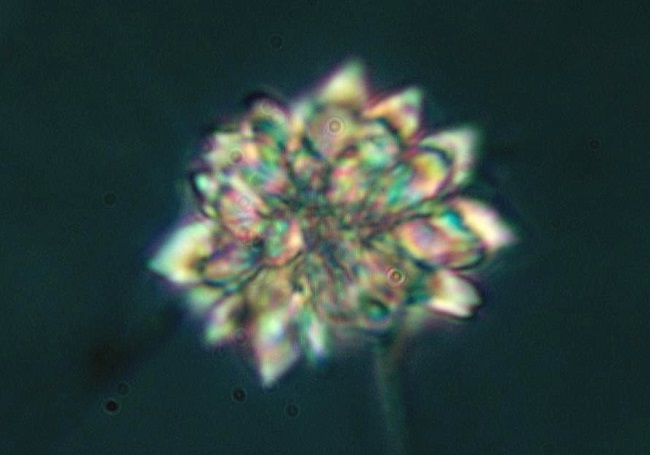
Oxalate Crystal. Image: Facebook, Trying Low Oxalates

What is time? We don’t really have a solid answer at the moment, but it is a rich area of interest and research. Some physics equations that we use to describe the universe work best if we leave time out. But, intuitively—especially since we experience time on a daily basis—leaving it out of the equation does not feel quite right.

What if it is not that time is being left out so much as that it is being compensated for? When time speeds up—light slows down. When time slows down—light speeds up. When time is too fast or too slow, light has to be too slow or too fast, respectively. When light is too slow or too fast, it is not able to appear as itself. Instead of light qua light—light as light—it will appear as … oxalate crystal?

When the Cycle Spins Backwards

Thiamine has been studied extensively by Drs. Derrick Lonsdale and Chandler Marrs, whose book, Thiamine Deficiency Disease, Dysautonomia, and High Calorie Malnutrition, explores how thiamine deficiency alters the functioning of the brainstem and autonomic nervous system by way of metabolic changes at the level of the mitochondria.

I suffered from fatigue, gastrointestinal dysfunction, joint pain, and cognitive loss. The first time I tried high-dose thiamine (vitamin B1), I had a profound recovery. My body tightened, my pain vanished, and I felt clear-headed, strong, and happy.

But, after a few weeks, I hit a wall. Thiamine lost its potency, and I stopped.

A few months later, when I tried high-dose thiamine again, I experienced something odd: a slow-motion grinding in my gut that took my breath away. For lack of a better phrase, it felt as if time were slowing down for me.

Thiamine powers the Krebs (energy) cycle. When I took it the second time around, it felt as if I had eclipsed some limit, and was powering Krebs in reverse. Instead of using my energy cycle to make energy, I was using it to make matter.

The Speed of Reality

What is the nature of reality? I was raised Catholic, and continue to love my Catholic faith. I’m inclined to respect the old sayings, such as we are the light of the world. I respect the old ideas—while also probing and questioning them.

The holographic principle was first proposed by Nobel laureate Gerard ‘t Hooft in the 1990s. In 2017, a UK, Canadian, and Italian study provided substantial evidence that the universe is, indeed, holographic. But what would that mean? I know myself—and the world—as matter, not light.

What if light functions like a plasma? A plasma is something that possesses a dual character, such as a gel. In some ways, gels behave like a liquid; in other ways, like a solid. We see a similar indeterminate quality in stem cells. A plasma’s relationship with time is that of an open gate: not limited to one direction. Neither chicken nor egg, it is a kind of chickenegg.

Perhaps light functions similarly. It can display characteristics of matter, or characteristics of energy. When time (the background fabric) is slow, light can acquire speed, like matter. When time (the background fabric) is fast, light can acquire density, like energy. At the speed of light, the perception of the background fabric flips, from “slow,” to “fast.”

[O]ur observable universe is at the threshold of expanding faster than the speed of light.  ―physicist Lawrence M. Krauss

Er, “background fabric,” you say? What in the name of Michelson-Morley is that? We treat the background against which our observations are made as a vacuum—zero.

That is right. We do. I am suggesting that we may be mistaken. I am suggesting that the background here—the Cosmic Microwave Background or CMB—is not a vacuum, but matter and energy, trading places.

And that matter and energy, trading places, is light.

Like Eugene Wigner, who famously noted the unreasonable effectiveness of mathematics in describing the natural world in 1960, I am fascinated by suspiciously ubiquitous symmetry. Moon’s size: 27.27% of earth’s size. Moon’s orbital period: 27.27 days. The sun is 400 times larger than the moon—and also 400 times farther away. Hmm. Kind of makes you scratch your head a little, doesn’t it?

The black hole at the center of our galaxy, Sagittarius A*, has the largest angular size in the sky, followed by M87. M87’s black hole is 1000 times bigger, but roughly 1000 times farther away. —Feryal Özel, Harvard University Black Hole Initiative

In the spirit of Plato and René Descartes in the old age, and Nick Bostrom and Donald Hoffman in the new one, this essay asks a fundamental question: Is what we perceive an image that’s being rendered? Perhaps reality is not static, like a painting; but it has speed, like a movie.

Does it have a “correct” speed? Yes and no. It has a correct speed, but the correct speed can be achieved in different ways. It can be achieved via (for example) the color green—or via yellow + blue.

We have assumed that time is like a river whose speed we are strapped to. What if it is more like a current in which we can swim backward or forward—or tread in place? Altering the pH of my brain (e.g. with a micro dose of “acid,” LSD) seems to affect how long I am able to remain in each discrete moment of time. The more acidic, the longer—up to a point.

In other words, if we think of time as being comprised of discrete units—the way an image is pixelated, the way a movie is comprised of frames—my speed need not match time’s speed, but if it veers too far afield, I can run into problems.

Homeostasis Against the Speed of Time

I am like a glass of water, pH7. I maintain homeostasis—balance. When I perceive a background force that is expanding (high manganese?), I contract, becoming more salty. But would we perceive too much salt in the glass if the fabric against which the glass was rendered were expanding?

When I perceive a background force that’s contracting (high iron?), I expand, becoming less salty. But would we perceive too little salt in the glass if the fabric against which the glass was rendered were condensing?

Here is how time seems to operate, in me.

To one side of the baseline, time is slower (dopamine). To the other side, time is faster (serotonin).

I can slow time down, using dopamine, up to a point. But if I start to have too much dopamine, I will compensate, by hyper-methylating.

I can speed time up, using serotonin, up to a point. But if I start to have too much serotonin, I will compensate, by hypo-methylating.

This creates problems with perception. For one thing, the feeling of hypo-methylating can mimic the feeling of dopamine. Is time slow—or am *I* slow? Similarly, the feeling of hyper-methylating can mimic the feeling of serotonin. Is time fast—or am *I* fast?

What if, in Parkinson’s disease, my metronome needle is stuck all the way to the time’s left (Alpha-shifted)? I am both dopamine-toxic—and hyper-methylating.

What if, in Amyotrophic lateral sclerosis (ALS), my metronome needle is stuck all the way to time’s right (Omega-shifted)? I am both serotonin-toxic—and hypo-methylating.

In both instances, I am trapped. If I am too fast (hyper-methylating), how can I slow down if the background is too slow? But if I am too fast, the background will look too slow. If I am too slow (hypo-methylating), how can I speed up if the background is too fast? But if I’m too slow, the background will look too fast.

With two parallel trains, it is difficult to judge speed in a meaningful way. Am I slow—or is the train beside me accelerating? Am I fast—or is the train beside me decelerating?

Of Tumors and Time

I am interested in looking at the cosmos as a whole, where what we perceive (a tumor, a planet) is not fundamentally separate from its environment. This is not balls of matter in a sea of air. It is light within a speed-of-light boundary (black hole?) that is both achieving the speed of light (“sun”) and precipitating out of solution (“moon”) simultaneously. The speed of light is the 2D tipping point about which time changes directions, from acceleration to deceleration.

The perception of the speed-of-light “speed limit” depends upon an observer, and varies.

The speed of light can function like a lens. When the image becomes too dense, to one side of the lens, it becomes too expanded, on the other.

With cancer, I am deranged on both sides of time—both sides of the speed of light lens. To one side, I am too salty, too bitter. To the other, I am not salty enough. Instead of the flower, I become the fruit and the seed.

Like the speed of time, the speed of light is not necessarily a simple number (“green”); it can be a compound number (“blue + yellow”). Light has a “net” speed that I am helping to create with my own speed.

Those brown sun-spots on my shoulder? It may look as if their metronome is keeping pace with the rest of me, but what if it’s a trick of the eye? I suspect they are both denser and wider than time. They require both more magnetism (iron)—and more electricity (copper). They present as “green.” But could they be “blue and yellow, superimposed,” behind the scenes?

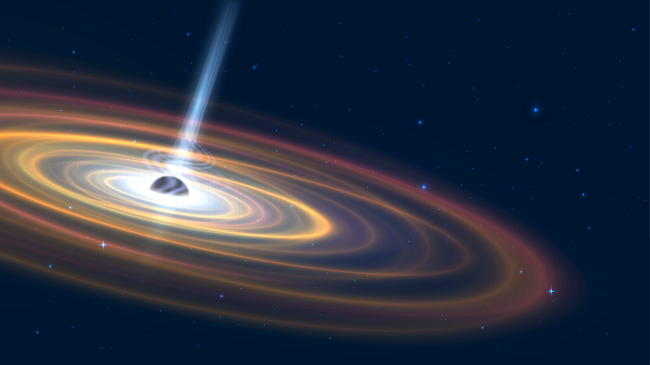
Once my lens curves too little or too much, I am no longer “flat” (relatively speaking); I start to have more depth than my environment. Instead of space, I start to acquire time—a new axis that is perpendicular to space the way a quasar is perpendicular to a galaxy.

Quasar: Shutterstock.

What if, when I insert a new lens—a fresh perspective, “new light,” a stem cell—into an old environment, I run the risk of re-setting the metronome, and creating a new definition of so-called flatness—speed zero? Perhaps new light creates a new 2D plane from which light can expand and condense (energy)—or condense and expand (matter). It creates a “fresh green,” if you will, from which can be derived “fresh blue” and “fresh yellow.” New light is capable of operating at a different time signature—a different scale.

What does the basal cell carcinoma on my shoulder look like? A sinkpit. A small vortex. An actual indentation, like a tiny tornado. You can almost see light spinning so fast that it’s spinning backward—imploding, precipitating out of solution (rocky planets). If I use radiation or hypo-methylating agents to slow time down, I might swing too far to the other side, where light is spinning so slowly, it burns up (gas giants). Ideally, I want to be in the middle. I don’t want my metronome to be eclipsing the speed of light, to the right of time, and dipping beneath the speed of light, to the left of time, faster than the rest of my body, the rest of the universe. I want to be oscillating at the speed of light, along with the rest of the rendered world.

The Speed of Light Squared

Perhaps, in a holographic universe, the speed limit for a single universe is not the speed of light, but the speed of light squared. When we reach the speed of light squared, a new observer is created.

In this video clip, called “Microscope Imaging Station Cancer Cells behaving badly,” I believe we are witnessing cancer cells as they achieve the speed of light squared (“round up”) and become refractile. When we “round up,” we make duplicate copies of the same information (e.g. DNA). When we round up by a factor of two during embryogenesis, we produce twins. When we round up by a factor of three, we produce triplets.

We don’t create the new inside a vacuum. We make the new inside—or outside—the old.

I am interested in physicist Nikodem Poplawski’s theory that our universe is the interior of a black hole inside another universe. In fact, I wonder if we could be inside a black hole inside a black hole inside a black hole—etc.—where “black hole” is the 2D boundary known as the speed of light. Moving outward from brane to brane, scale increases. Moving inward from brane to brane, scale decreases.

A holographic universe is one in which light can serve as background or foreground, canvas or painting—or canvas and painting. As lovely as this is—are we the light of the world, for reals?—it presents difficulties with perception. How can I know what type of light I am seeing? Is what I perceive light itself, the genuine article—or light playing the role of light? Or light playing the role of light playing the role of light playing the role of light?

How many iterations of light are in an E8 crystal?

Is the speed of light functioning as a boundary we can’t see beyond? And—perhaps more importantly—is there a degree of remove above or below which light is no longer light but something else entirely—matter or energy?

The Imprecision of Time

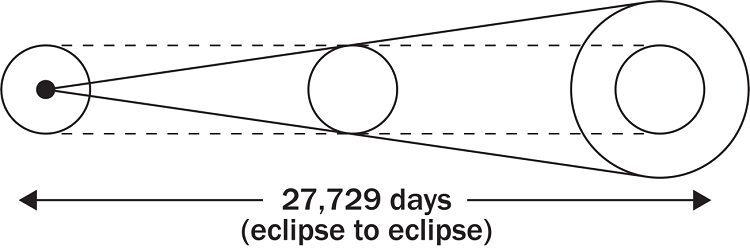
We don’t seem to have a solid grip on time. We need leap years—even leap seconds—to make our calendars work. But there is a “cosmological constant” when it comes to time. Was there a total solar eclipse on a certain date? Add or subtract 27,729 days, and see if there was also a total solar eclipse on that date (spoiler alert: there was).

eclipse to eclipse

27,729 days is ~76 years, about the length of a human life. It’s also roughly 70 times 360 plus 7 times 360 days. Could it be the number of days between branes of time—the distance above or below which light undergoes a state change?

I don’t know. But here’s something interesting. The Tunguska Event took place on June 30, 1908. The largest explosion the world has ever seen, it flattened 80 million trees. No one knows what caused it. But if you add 27,729 days to the date of Tunguska, you get another date—May 31, 1984. What happened on this date?: US performs nuclear test at Nevada Test Site.

Are we living inside a singularity? Beats me; I’m a short story writer. I barely understand what a singularity is. But I do know this. I was sixteen years old in 1986. When I was a teenager, I used to love Mary Chapin Carpenter, especially a song called When Halley Came to Jackson.

“It came from the east just as bright as a torch

She saw it in the sky from her daddy’s porch

As heavenly sent as it was back then”

Funny. Halley’s Comet “comes around” every ~76 years, almost like a nuclear reaction slicing backward through the branes of time. Almost like … Chernobyl.

Haley's Comet
On the Left: Haley’s Comet 1910, image Wikimedia Commons. On the right, Haley’s Comet 1986, image by Bob King.

What if, because of the act of rendering, light can exhibit characteristics of paradox? When it eclipses the speed of light, precipitating out of solution, it’s “too cold because it’s too fast.” When it dips beneath the speed of light, burning up, it’s “too hot because it’s too slow.”

Might this type of paradox—of metabolic cul-de-sac—have bearing on human illness? If I’m “too cold because I’m too fast,” how can I slow down? I’m already too cold! If I’m “too hot because I’m too slow,” how can I speed up? I’m already too hot! Time is a veil, and I am trapped to one side.

In these models, matter, light, and energy exist on a continuum. A spectrum. Matter or energy may behave as light, in locus light, as long as allowances are made. When light is denser than light (i.e. energy), it’s too hot, but it’s able to be too hot if time is too slow (Autism?). When light is faster than light (i.e. matter), it’s too cold, but it’s able to be too cold if time is too fast (ME/CFS, Chronic Fatigue Syndrome?).

So what’s the answer? I don’t know. I’m sorry; I wish I did. I’m better at asking questions than answering them. My hope is that others who understand biology, chemistry, and physics far better than I will join the conversation, and help us to decode our illnesses.

But I do know this. When I was at my sickest, my pineal gland and my eyes did not seem to be in agreement about the character of light they were observing. Was it going fast, like matter that has speed, in a 3D image where there’s foreground and background (blue + yellow)? Or was it innately fast (green), a 2D “mono” image, where the subject itself is high-energy? The pineal gland, a tiny crystal at the center of the brain, was dubbed “the seat of the soul” by René Descartes. It sets the circadian rhythm, communicates with the HPA axis, and is the font of the neuroendocrine cascade. If hormones matter, the pineal gland matters.

The lack of an objective, outside observer is a serious constraint. How can I gauge time if the instrument I am reading time with is part of time? I have to both read time (pH) and move around in it (core metabolic rate) using the same instrument: my brain.

A Metabolic Straitjacket

After my chronic fatigue had persisted for a while, I began to realize I was wearing a metabolic straitjacket. Whatever I ate or drank was not merely providing nutrients for my body; it was providing information for my brain. This “double duty” was a huge handicap. Sodium gave me the power to increase my metabolic rate—but not the permission. Potassium gave me the permission to increase my metabolic rate—but not the power. When I would attempt a metabolic increase in spite of an acidic terrain, I would get gout-like pain. This happened a month or two before my cancer.

My basal cell carcinoma is analogous to a local high-pressure system. A planet forming in the sea of me. The cells in my shoulder are “hoarding” my time, if you will. They are stealing my electricity and my magnetism—my copper and my iron. They’ll hoard my electrolytes, too. What can I do, other than try to have them removed? If I use vasodilating agents, like raw garlic extract or niacinamide, unless I inject them, my brain reads them and responds to them, too. It does not fix the asynchrony. If I use radiation or hypo-methylating agents, to slow down time, that might work for a while, but there is a tipping point—the speed of light—above which, to slow down is actually to speed up, and these cells reach that threshold sooner than the rest of me.

It’s not that they can’t dance. They’re just dancing to a different beat.

The best thing I ever did for my health was to eliminate all glyphosate, i.e. switch to a 100% organic diet. Glyphosate (“Roundup”) was giving my brain false information about light and time. Cosmetics, underwear, mattress, etc. I will not even chew a stick of gum if it isn’t organic. Nothing makes me sicker quicker than chemical fragrance in products such as Glade plug-ins, Bounce, Downy, Tide, etc. I use organic products that treat the universe as one coherent network, a communicating whole—a garden. Because it is.

Many Worlds

I am a fan of physicist Sean Carroll and his defense of the Many Worlds interpretation of quantum mechanics, first proposed by Hugh Everett in 1957. According to Many Worlds, the universe continually splits into new branches, to produce multiple versions of ourselves. Carroll thinks that, so far, Many Worlds is the simplest possible explanation of quantum mechanics.

Many Worlds may seem exotic at first, but it possesses a simple power, especially if we treat the speed of light as a lens. When viewed from beneath the speed of light lens, light will appear to be branching into many worlds. When viewed from above the speed of light lens, light will appear to be condensing into one. At the speed of light, light is light.

If my brain misunderstands the degree of curvature of the speed of light lens, and the way the speeds of light and time titrate, it can become metabolically trapped. In Chronic Fatigue Syndrome, I may be trapped above the speed of light. Many worlds are branching faster than I am able to move through them. In Autism, I may be trapped beneath the speed of light. Many worlds are condensing faster than I am able to move through them. In Autism, it is as if I am trapped in the future. In Chronic Fatigue Syndrome, it is as if I am trapped in the past.

Endnote: Before he met my mother, my father was engaged to a brilliant woman named Frances Marshall Watkins. Fran was diagnosed with Amyotrophic Lateral Sclerosis (ALS), and died before they could wed. I would like to dedicate this essay to her. Had she not died, I would never have lived.

We Need Your Help

More people than ever are reading Hormones Matter, a testament to the need for independent voices in health and medicine. We are not funded and accept limited advertising. Unlike many health sites, we don’t force you to purchase a subscription. We believe health information should be open to all. If you read Hormones Matter, like it, please help support it. Contribute now.

Yes, I would like to support Hormones Matter. 

Photo by Daniele Levis Pelusi on Unsplash.

Coming Out of the Disease Closet – The Challenges of Chronic Illness

9.1K views

“When do you come out of the closet?”

“What?!” I replied, half choking on my coffee.

This question came as my friend, a fellow chronic disease sister, and I were getting coffee and discussing the usual thing topics girls in their twenties discuss, work, friends, boys, relationships, boys, world news, boys, you know the usual.

She clarified; “Say you are dating someone, when do you tell them that you are sick… You know, come out of the ‘disease closet’?”

I took a moment to reflect because it was a good question; oddly worded but nonetheless a good, thought-provoking question.

I thought back to the first time I came out of the disease closet. It was after a few weeks of dating this guy I really liked, who was a bit older than me. I was having surgery in a month and I knew I needed to talk about the surgery before it happened (so it wouldn’t seem suspicious if I wasn’t up to going out for two weeks or so). I very hesitantly told him a brief version of my medical history and the impending surgery. He took a few minutes to pause and then finally after what felt like forever he said “So you can’t have kids.” I was 18 at the time and so my response was “I don’t know I haven’t really tried, have you? I mean who really knows if they can have kids unless they’ve tried.” He followed up with the standard ‘you’re a very brave girl’ spiel and that was the end of that. I think we had one or two more dates after that and then two weeks before my surgery he stopped returning my texts and calls. No explanation, nothing, that was that.

I had (or at least I thought I had) learned a lot from that experience; with the main takeaway being ‘my private matters are best kept private.’ I am 21 now and I have been dealing with health issues from the day I was born. I’m not looking for praise or an award, I just want to live a normal life. I graduated high school with honors, I graduated from college in three years and have found a lot of success in the working world. If I never told you I was sick, you would never know that I have stage IV endometriosis with endometrial lesions growing all the way up towards my liver and covering almost the entirety of my reproductive system, causing me crippling pain at least once a month.

When I am in pain you would never know it. Despite being in pain, I will still meet you for coffee. I will still go to class or to work or meet with a client and there will be a smile on my face, because I just want to be normal. I don’t want to have to come out of the closet because someone somewhere decided being ill is shameful. I have nothing to hide. I have stage IV endometriosis, thyroid disease, chronic migraines, weird allergies and narrow angle glaucoma and I’d wear it all on my shirt if I didn’t think that people would judge me as being ‘lesser.’ I wouldn’t be stuck in some ‘disease closet’ if I thought that I could tell people these things without having them give me ‘sad’ eyes or tell me (or not tell me) they don’t want to date me anymore because I have ‘too many problems.’

But I can’t say all of these things openly because there is a stigma attached to people with chronic diseases; those who are disabled, those who fight their bodies on a daily basis. I don’t get to talk about these experiences, the countless hospital visits, the fifteen surgeries that have made me a stronger, better person because I am stuck in this ‘disease closet;’ because to be ‘ill’ is to be abnormal and we are taught to be ashamed of abnormality.

Its not easy but we all need to stop hiding. No one is ‘lesser’ for being different and no one should be made to feel that way. By hiding, we convey that we have something worthy of hiding, something that we should be ashamed of. I’m not saying to go to the next person you meet and say “Hi I am so and so and I have such and such” because that’s just a different way of defining yourself by your illness. Instead, you should be able to talk candidly about what ever adversities have been thrown your way without feeling ashamed. Through openness we teach acceptance of ourselves and of others. I apologize if that sounds like it came out of a fortune cookie – but its true! I’ve learned that the problem wasn’t coming out of the ‘disease closet’ to others, the problem was I hadn’t ‘come out’ to myself.

If you would like to share your story regarding your personal experiences dealing a chronic illness or telling others about your health issues, feel free to do so in the comment section below. Or write a blog for Hormones Matter. If more women would come out of the disease closet maybe we can begin the long journey of curing some of these often invisible illnesses. Come out of the disease closet.

This post was published previously in February 2013.

The Match Game of Healthcare That Works: Understanding Insurance

4.9K views

Understand What Insurance Is and Is Not

Finding healthcare resources – people, treatments, care – is a match game. Your quest is to find resources to partner with you to feel better, heal and experience the life you want to live.

Reading “match game,” the vision that probably came to mind involves perusing a list of “providers” your insurance company included in a thick volume of paperwork. Or maybe you wish you at least had an opportunity to have access to such a list. You see lists organized by “specialty” (which you may or may not understand) and geography; and you hope you can find someone with solutions for your needs – someone to help you feel better – from this paltry information.

The Traditional Match Game: The Insurance Company Sets the Playing Field For “Health”

Health insurance is not healthcare. Insurance is business. Health insurance is a payment system.

In the framework of the traditional match game, the insurance company sets the rules with four basic things: 1) a list of “providers” – people who meet the company’s contractual requirements; 2) a list of acceptable services (your “benefits”) the providers can offer for certain ailments; 3) acceptable fees for such services; and finally 4) a means to parse the payment/cost burden. This is so familiar that perhaps we didn’t even question this until prices sky rocketed and services diminished.

Playing the well-being match game within this familiar framework puts the insurance corporation in a position of power. Playing the match game this way immediately puts a corporation, a payment system, in control of your well-being. Through their contractual relationships they determine what constitutes health, who is allowed to serve your needs, and what treatments or medications are acceptable. Insurance companies narrow the field of possibilities and choices for your path to well-being.

By engaging in this match game we’ve been attempting to attain well-being from a system in which the rules have been set by companies that are focused on payment and profit. Pause and think about that for a moment. We have been lulled into looking to a payment system as a means to experience vitality.

You may have had very good success with this structure. While this may work well for some, and may work some times; for many it is a challenge to find care that works. That challenge can take a further toll on health.

In this traditional match game it is very difficult to insert your personal needs, values, and beliefs about health and well-being into the framework of a payment system. It can be a challenge to find the right partner in healing, the right practitioner, who supports your personal journey to live your best life.

Time To Shift the Paradigm

If it doesn’t work for many, if not most, people to look to a payment system as a means to experience well-being, what do we do? It requires a change in the fundamental nature of the match game. In the next article we’ll explore this shift. It begins with identifying your personal concept of the essence of health, well-being and healing. This will vary for each person, and can vary over time. This shift puts each person back into control of their health.

About the author: Deb is co-owner of Experience In Motion, which equips organizations with tools to curate meaningful experiences for customers and employees. Deb’s personal journey from decay to well-being inspired an emphasis in improving healthcare experiences for patients and practitioners by focusing on experiences that heal and self-caring as a way of organizational being. www.experienceinmotion.net.

Note: This is part of an ongoing series to equip you with a process, a path, to identify and experience healthcare that works for you. Other articles in this series are:

The heart of healthcare that works: know your personal worldview of health   

Find your Inner Chris Columbus

Pondering Cancer: the Hubris of Innovation

4.5K views

This week begins breast cancer awareness month, a movement started 25 years ago largely by women and family members affected by cancer. The efforts of these men and women have been extraordinarily successful. Who doesn’t associate the pink ribbons with breast cancer? To boot, the public awareness catalyzed the need for research. The War on Cancer was born and a staggering amount of federal and private dollars research dollars have poured into cancer research. Federal breast cancer research dollars totaled $763 million in 2010.

And yet, except for the years between 1999-2005, which saw a 2% decline in new diagnoses (NCHS, SEER), largely attributed to the post-WHI decline in HRT use, breast cancer rates have increased steadily over the last two decades. The incidence of breast cancer is now 1 in 8 women (SEER). It seems the war on breast cancer has not been won.

I am not a cancer researcher and so my thoughts on cancer are offered with some trepidation. Sure, I did the requisite pharmacology papers and presentations in graduate school and even taught the basics in some of my undergraduate courses, but I don’t really know cancer, not like I know other disease processes. And so, as I pondered the state of cancer and reviewed the statistics, looking for an angle into this post, somewhere I could add to the conversation and not just regurgitate existing pablum, what became clear was a nagging sense of intellectual unease. Despite the billions spent on cancer research and the bevy of new treatments, more women are getting cancer than ever before. Perhaps better diagnostics explain the ever increasing incidence of breast cancer. Perhaps not.

Like so many modern diseases, cancer sits at the nexus between high and low science, between medicine and marketing. It is one of those diseases that at once benefits from 20th-21st century science and technology, and suffers immensely from the hubris of those same innovations.

A case and point: a report by the Personalized Medicine Coalition published three years ago and discussed last year in Bloomberg BusinessWeek indicates that of the $292 billion dollars spent on prescription medications in 2008 almost 50% went to medications that didn’t work. That means in one year, we spent $145 billion on medications that didn’t work. The report goes on to suggest that billions more were spent treating the side effects and adverse reactions.

Aside from the ridiculous amount of money spent on medications that don’t work and the billions more spent mitigating the potentially serious side-effects of these medications, both of which threaten our national economy in a very tangible manner; aside from the economics, the point that may be lost in this conversation, is that we are ingesting these medications and trusting them to work or at least not make us worse.

What happens when medications originally intended for one use are marketed for another? What happens when the need for blockbuster drug sales overshadows the actual benefits of a medication or worse yet, hides the dangers (DES, HRT, Vioxx, Yaz/Yasmin)? What happens when we disregard basic genetics, basic science and common sense when prescribing a medication? What happens when we use the one-size-fits-all or the one pill-cures-all approach?

Are we creating the very cancers we are trying to treat?

Does anyone come through womanhood unscathed?

5.7K views

Over the weekend, as my colleagues and I were putting this issue together, we began talking about the hormone stories that were crossing our desks. More often than not, the women submitting these stories describe years of pain, suffering and uncertainty. In some cases, lab tests were done, in others they were not or not until years later. Inevitably, each woman was placed on oral contraceptives, sometimes for markedly different symptoms, and sent home, repeatedly. For most, oral contraceptives were not effective and in some cases, significantly exacerbated the conditions for which they were prescribed.

Gradually, each of us began to share our own health stories and those of our friends, sisters, mothers and daughters. It’s not that we hadn’t shared our stories before. We are, after all, a bunch of women working on women’s health issues. We talk about everything. Before this weekend, however, I don’t think any of us understood the depth of experience uniting us in this mission. There was not a single woman in the room or in our immediate friend or family circle who did not have a hormone health story. And these were not benign complaints of moodiness or feeling hormonal, those are a given. Rather, most of us and everyone we knew had experienced serious, often chronic, life-changing, presumably hormonal, health events. Many of us have had multiple surgeries.

This left me wondering, does anyone come through womanhood, unscathed? Is it just the nature of being a woman and having a uterus that predisposes us to these many ailments? In other words, is this normal? Statistically, apparently it is.

When epidemiological data are added up, most, if not all women, can be expected to have at least one hormone-related health issue at some point in their lives, not including menopause. Many women have multiple. And even if the etiology some of these conditions is not entirely hormonal, it’s a given that hormone cycles or synthetic hormones will moderate the condition in some manner. Which brings me to my second question; could these health issues be prevented?

At the moment, no, because we simply do not measure, attempt to predict, or manage women’s hormone health and disease in any discernible manner. Why don’t we have baseline hormone measurements when girls begin menstruating? Why isn’t hormone measurement a standard part of women’s health care, like blood pressure or cholesterol? Sure, excuses abound about why we can’t or shouldn’t measure women’s hormones, but bottom line: we cannot manage or even understand what is not measured.

Then there is the question about what is and is not a hormone-related condition. Until puberty boys and girls have almost equal rates of many conditions, but after puberty there are significant, sex-based divergences in the areas of mental health, immune function and pain-related disorders, among others. These differences are often attributed to hormone differences. Of course, matters of the reproductive system are hormonal but for many diseases the hormonal connections are not as clear.

Where is the dividing line between a symptom or condition that is considered hormonal versus one that is not? If a hormone binds to a receptor on a cell and elicits a reaction that modifies the cell’s behavior, can that be considered hormonal? I would say yes. Maybe at a very basic level, many diseases, not normally considered hormonal can and do have hormonal components that we ought to be addressing.

Another question to consider, why do we label some hormones male and others female? We all have the same complement of hormones, albeit in vastly different concentrations. Women have all the androgens that men have and men have progesterone and all of the estrogens that women do. Why are we not measuring more androgens in women and for that matter, more estrogens in men?

As a woman, among many women, I am acutely aware of the limitations of current medical science. As a scientist, I am dumbfounded that the solutions have not come to fore. As mother, most especially as a mother, I don’t want my daughter to suffer the way I and so many women have and still do. The obstacles to understanding are not as complex as we think. The first step is simply being open to the possibility that there is problem that deserves a solution. When you read the stories, posted by the brave women willing to speak, consider who you know that has had similar experiences. Consider the impact telling your story could have.

It is my hope that as more women share their stories, it will become abundantly clear that this problem deserves a solution. Join the conversation. If not for yourselves, for your daughters.