birth control

Doctors Say the Darndest Things About Birth Control

8.8K views

A while back, a friend of mine shared a story on Facebook about a doctor’s nonchalant response to side effects experienced by a patient on birth control. I commented that this was one of my least favorite among the common phrases doctors use to gaslight women.

That friend was Sara Harris, who is doing amazing work getting the word out about Fertility Awareness Methods and helping women with hormone issues in Australia with her podcast, Follow Your Flow. Sara knew I was wrapping up work on a new, expanded audio version of my book and recommended I visit her podcast again to promote the audiobook and present my ‘Top 10 Least Favorite Things Doctors Say About Birth Control.’ You can listen to the resulting podcast here.

Lack of Respect

Obviously, I took her up on the offer, burning a lot of energy to get my Top 10 in the proper order – only to change that order and change it again the more I contemplated each phrase. Ultimately, I felt like I could have just as easily said they were in no particular order because each dismissive phrase poses its own set of disturbing problems.

For the purpose of this article, I want to focus on three of these statements, which are particularly egregious in their lack of respect for the potent drugs delivered by hormonal birth control and the detrimental impact they have on women’s health.

And so, here are those three statements… this time, in no particular order.

Localized Hormones

“This birth control option is safer because the hormones are localized.”

Doctors tend to offer this falsehood when speaking about either NuvaRing or the hormonal IUD. It is frequently used to sell a young woman on using the device, but it’s also used later to dismiss questions she may have about side effects she develops after insertion.

I have trouble believing that a medical doctor actually believes that these hormones camp out in the uterus and just manage fertility. Hormones are systemic. By their very nature, they travel throughout the body attaching to hormone receptors that reside on every cell in our bodies.

Now, here’s the kicker – not only are these drugs not localized, but they have the potential to be even more dangerous than hormones that are taken by mouth. Oral contraceptives (as with any drug taken orally) are processed through the digestive system in what is known as first-pass metabolism. This process reduces the concentration of active drug prior to being introduced into the blood stream.

Consequently, drugs distributed via the uterus bypass this first-pass metabolism thereby reaching the bloodstream more quickly and in a more potent state.

It shouldn’t be surprising then that a recent Danish study found that women on NuvaRing were six times more likely to develop a deep vein thrombosis than women not taking birth control, and twice as likely as women taking a combination pill.

Psychotropic Candy

“Don’t worry. I’ll just prescribe an antidepressant to go with your birth control.”

Many doctors seem to think antidepressants can be used to accommodate just about any symptom manifested as a result of birth control. In my book, In the Name of The Pill, I shared the story of a young woman with lupus.

After quitting hormonal birth control, her lupus symptoms became surprisingly manageable. This continued for a few years, until she decided to try a different formulation of birth control. Shortly after starting The Pill again, her lupus symptoms came roaring back. But, when she told her doctor about it, he didn’t think the birth control had anything to do with her flare-ups.

He advised her to keep taking it and prescribed her an antidepressant to ‘help her rest better.’

I believe doctors who pull stunts like this have lost any sense of respect for the potency of the drugs they are doling out. This goes for any drug – not just birth control. As one of the doctors Barbara Seaman quoted in her landmark book, A Doctors’ Case Against the Pill, warned, “It needs to be emphasized that if you give a patient one drug and counteract it with another, there is a rising curve of adverse reactions.”

In my opinion, this warning should be doubled where birth control is concerned because the powerful drug is essentially being used to treat pregnancy rather than some life-threatening disease. As Mayo-trained, Dr. Philip Ball put it at the Nelson Pill Hearings, “I believe that we physicians are so used to administering very potent medications to very serious disease problems, we have not really yet learned, it is a totally different circumstance to administer powerful but nonessential drugs chronically to healthy young women.”

You can read more about specific concerns related to the mixture of psychotropic drugs and hormonal birth control here.

Suddenly Supplements

The third comment deals exclusively with the Depo injection and needs a little setup. The FDA requires a black box warning on this drug’s information pamphlet. A warning in big, bold letters accentuated by a thick, black frame states:

“WARNING: LOSS OF BONE MINERAL DENSITY”

The warning goes on to explain that your bone loss will be greater the longer you take the product and these changes may be irreversible. It reinforces these concerns by stating that Depo should not be used as a long-term birth control solution, even capping its recommended use at no more than two years.

That seems pretty clear and absolute, but many women who have asked their doctors about this warning have been told:

“Just take a calcium supplement, and you’ll be fine.”

Mind you, the FDA warning says nothing about taking a supplement to offset the affects. In fact, it doesn’t suggest there are any measures you could take to avoid the potential consequences.

The FDA is a slow-moving, bureaucratic government agency. It takes a lot of evidence to overcome the inertia associated with issuing such a dramatic black box warning. For a doctor to ignore or deny such a warning and suggest the solution is as easy as taking a calcium supplement is borderline criminal.

Health as a Business

If your doctor ever uses any of these three lines, you should seriously question his/her motivation. Do they care about your health or do they see your healthcare as a business?

One of the things I frequently tell women is to trust your questions more than the answers. If you mention a side effect that concerns you, and your doctor seems more interested in convincing you The Pill had nothing to do with it, don’t assume you’re crazy or you’re the only one experiencing this. Your body is sending you this warning sign for a reason. Keep questioning.

I once had an Ob/Gyn tell me that it’s difficult to get anyone from her specialty to say anything bad about hormonal contraceptives because it represents about a third of their business.

However, if you are a medical professional who recognizes that birth control is much more dangerous than women are being led to believe, be proactive in sharing that information, even if you aren’t an Ob/Gyn.

Women need to hear it. Many feel isolated. They’re afraid to discuss their side effects because they think they’re the only ones having a bad experience. Or worse, they wonder if they may be going crazy.

An eye surgeon recently reached out to me and shared what’s been happening at her practice after she read my book. She said she always takes a complete medical history, part of which includes the patient’s use of hormonal contraceptives. Lately, even though she doesn’t deal directly with menstrual issues, when a woman reports certain ‘mysterious, undiagnosable symptoms,’ this doctor has started recommending they stop taking their birth control. She said a few patients have already contacted the office to thank her because their symptoms have improved dramatically.

I hope more physicians will hop on board and fearlessly tell women about the myriad side effects of birth control. We still have a ways to go, but maybe someday I will be able to compile a list of my Top 10 Favorite Things Doctors Say About Birth Control.

We Need Your Help

More people than ever are reading Hormones Matter, a testament to the need for independent voices in health and medicine. We are not funded and accept limited advertising. Unlike many health sites, we don’t force you to purchase a subscription. We believe health information should be open to all. If you read Hormones Matter, like it, please help support it. Contribute now.

Yes, I would like to support Hormones Matter.

This article was published originally on December 13, 2021. 

From DES to the Pill: Are We Doomed to Repeat History?

7K views

“The doctor wouldn’t have given it to me if he thought it was dangerous, right?”

My wife asked this salient question as we discussed the pros and cons of The Pill. It sent us both into deep reflection. Everything we read said The Pill was dangerous, but the doctor had acted like they should come in a Pez dispenser. To this day, I’m not sure where the cognitive began and the dissonance ended.

The DES Debacle: Origins of Obstinance

Doctors are generally dogmatic, but their nearly universal laissez-faire attitude toward The Pill seems particularly paradoxical when you study the scope and seriousness of its side effects. How can doctors believe that The Pill is safe, when tomes of studies suggest otherwise? Research links The Pill to everything from breast cancer and strokes, to Crohn’s Disease and lupus. To understand where we are and how we got here, it’s important to study the journey that brought us here.

By 1970, the current dogma that ‘The Pill is safe’ was well rooted in the medical community. However, enough doctors expressed concerns that Senator Gaylord Nelson decided to hold Congressional Hearings on the matter. The big three networks covered the hearings extensively, which caused great anxiety among women taking The Pill — and even greater anxiety among pill proponents, who subsequently demanded more ‘pro-pill’ doctors be included.

Senator Nelson took umbrage with their complaints, noting that all but one of the previous doctors had actually been ‘pro-pill’ to some extent, but all had reservations about its complications. Nonetheless, many of the doctors in the second round of hearings seemed more decidedly ‘pro-pill,’ including Dr. Kenneth Ryan, who stated,

I know of no information that indicates that biological properties of the estrogens used in the contraceptive pill are any different than stilbesterol for which we have at least 30 years of clinical experience…(Competitive Problems in the Drug Industry, Ninety-First Congress, Second Session, Page 6541)

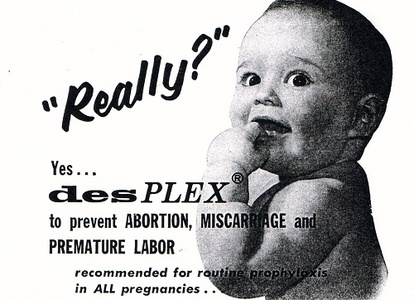
Very reassuring… Unless you were actually familiar with the 30-year history of stilbesterol, also known as diethylstilbestrol (DES). Sir Charles Dodds discovered DES in 1938, and rushed it to market in the public domain. The English doctor bypassed the patent process hoping it would discourage the Nazis from further tests on women prisoners in their development of ethinyl estradiol (Barbara Seaman, The Greatest Experiment Ever Performed on Women; page 36).

From DES to the Pill

Despite his noble intentions, Dodds soon regretted the decision. Without a patent, drug companies around the globe were free to produce DES. He never expected that synthetic hormones would be given to healthy women, and was horrified that doctors were prescribing it as hormone therapy for natural menopause.

You Can’t Put the Hormones Back in the Tube

Even worse, Dodds soon learned that an American doctor named Karnaky had begun blazing a new trail – doling out DES to ‘prevent miscarriages’. Alarmed by the news, Dodds sent him a study he had personally performed, which showed that the drug actually caused miscarriages in animal subjects. It didn’t deter Dr. Karnaky or the many doctors who followed his lead. (Robert Meyers, D.E.S. The Bitter Pill; pp. 56-73)

Dodds began to feel like he was fighting a monster that he himself had unleashed. He was most concerned about how his discovery could affect certain cancers. He sent DES samples to the newly formed National Cancer Institute in the United States, and urged them to conduct tests and notify doctors.

Dodds wasn’t alone. The Council on Pharmacy and Chemistry warned,

…because the product is so potent and because the possibility of harm must be recognized, the Council is of the opinion that it should not be recognized for general use at the present time…and that its use by the general medical profession should not be undertaken until further studies have led to a better understanding of the functions of the drug. (Barbara Seaman, The Greatest Experiment Ever Performed on Women; page 44)

The concerns sent murmurs through the medical community, and many doctors began experimenting with lower doses of DES. By 1940, the editors of the Journal of the American Medical Association (JAMA) felt compelled to add theirs to the litany of warnings:

“It would be unwise to consider that there is safety in using small doses of estrogens, since it is quite possible that the same harm may be obtained through the use of small doses of estrogen if they are maintained over a long period.” (JAMA, April 20, 1940)

In 1959, the FDA determined the link to side effects (including male breast growth) was sufficient to ban poultry farmers from using DES as a growth hormone. However, the widespread use of DES in humans continued. In fact, it had become standard medical practice by the time Dr. Ryan assured Congress that The Pill was just as safe as DES – showing how medical dogma often trumps scientific evidence.

The greater irony of Dr. Ryan’s statement materialized one year after his testimony, when researchers first linked a rare vaginal cancer to the daughters of women who received DES during pregnancy. The FDA reacted strongly, listing pregnancy as a contraindication for DES use.

Consumer Groups Take the Lead

You would expect this to be the beginning of the end for DES. Shockingly, the medical community responded with indifference, continuing to prescribe DES for a variety of ‘off label’ uses, including as a morning-after pill, to catalyze the onset of puberty, and the old faithful, hormone replacement therapy. (Robert Meyers, D.E.S. The Bitter Pill; page 185)

It took nearly a decade of passionate effort from consumer movements like DES Action to convince doctors to (mostly) abandon DES. Dozens of lawsuits were filed; some were settled; and some are still pending. There is evidence that the harmful consequences could now be affecting a third generation of DES victims.

The current Director of Epidemiology and Biostatistics at the National Cancer Institute, Robert Hoover, M.D. oversees the DES Follow-Up Study to track the ongoing repercussions. With identifiable problems now affecting the grandchildren of women who took DES, the disaster hasn’t yet moved into the past tense of our nation’s history. Despite that, Dr. Hoover says:

There’s essentially a whole generation of medical students who don’t know the story. The story has such powerful lessons that I think that’s a tragedy…For about 20 years now, when I standardly ask in my general epidemiology lecture… how many of you have heard of DES, nobody raises their hand.

Sidney Wolfe, M.D., who headed up Ralph Nader’s Health Research Group offered this perspective,

DES is an excellent example of how drug companies behave, how they take advantage of the ways doctors act, and how they make millions of dollars by ignoring evidence of a drug’s harmfulness, by failing to get evidence that it is effective, and then by marketing a product that plays on fears and misconception. (Robert Meyers, D.E.S. The Bitter Pill; page 208).

In just 20 years, the American Medical Association moved from “It would be unwise to consider that there is safety in using small doses of estrogens…” to embracing the release of insufficiently tested hormones as birth control for millions of women. I’m leery of trusting a dogma founded on such an erratically moving target. In their defense, the dogma really hasn’t moved much in the decades since.

Today, the medical community assures us The Pill is the most researched drug ever. Sorry doc, that reassurance just doesn’t ring true. At this point, it feels more like a phrase learned by rote than a statement based on any kind of empirical evidence. Unfortunately, it’s not the only hollow mantra that should raise a red flag when it comes to hormonal contraceptives. I will discuss how the medical community responds to scientific studies in my next post, The Spin Doctor’s Prescription for Birth Control.

[atkp_product id=’48881′ template=’bestseller’][/atkp_product]

We Need Your Help

More people than ever are reading Hormones Matter, a testament to the need for independent voices in health and medicine. We are not funded and accept limited advertising. Unlike many health sites, we don’t force you to purchase a subscription. We believe health information should be open to all. If you read Hormones Matter, like it, please help support it. Contribute now.

Yes, I would like to support Hormones Matter.

This article was published originally on Hormones Matter on August 31, 2016. 


Stroke, Birth Control and the Nelson Pill Hearings: What They Knew Then

12.8K views

I had a stroke from hormonal birth control at the age of 28. Prior to my stroke, I didn’t think much about the side effects of hormonal birth control, or any other medication for that matter. Like many of us, I took for granted that if a doctor prescribed the medication, it must be safe. Especially one as widely used and as cavalierly prescribed as birth control pills. I was so wrong. Nearly dead wrong.

Since that time, I have become increasingly aware of how little we know about the side effects of many medications and how many are under-researched before being “approved.” We can see that in the number of medications that get taken off the market. The pressure of the pharmaceutical companies to make a return on their research investment and their exorbitant advertising budget is putting human safety, and especially the safety of women, at great risk. I wrote my master’s thesis on risk communication, how women are informed of the risks of hormonal birth control, and what they know about blood clots. I’ll write more on that later but suffice it to say, the results were not promising. It appears that we are intentionally misled where drug risks are concerned. “Well, of course,” the cynic in me says. “After all, who is writing the risk communication in the first place?” The very people that need to minimize risks in order to maximize profits.

As mentioned in previous articles, I’ve recently begun a research project involving the Nelson Pill Hearings. Senator Gaylord Nelson scheduled these hearings back in 1970 after a number of reports, books (especially Barbara Seaman’s “The Doctors’ Case Against the Pill”), and studies brought up concerns about the safety of the birth control pill. Feminist groups and women’s health advocates attended the hearings demanding that women who had taken the pill be allowed to testify. To which Nelson responded, “I stated in advance of the hearings that every viewpoint would be heard on this issue… There will be women who testify… I will give you all the time—if you ladies will come to see me—would you girls have a little caucus and decide which one will talk one at a time, we can then decide what ladies will testify. Your viewpoints will be heard, don’t worry about that.” Then they were kicked out. And much of the testimony was never made public.

After a great deal of work from Karen Langhart, with the help of Senator Bernie Sanders’ office, and perhaps an invocation of the Freedom of Information Act, we were able to get a near complete copy of the Nelson Pill Hearing transcripts. (I say “near complete” because I have already found at least one instance of a page missing. But more on that later.)

A Massive Experiment

As someone who has survived a stroke directly related to the birth control pill, you can imagine how strange and challenging it is to read these hearings. Here I am pouring over 1500 pages of testimony from countless doctors who are describing problems, side effects, and dangers of hormonal birth control and as far as I can tell right now, they all seem to agree on two things. One, that putting women on birth control pills was (and I would say, still is) a MASSIVE experiment with millions of healthy women. Two, that there simply wasn’t enough research to understand even the short-term effects, let alone the long-term effects. Though these hearings were 46 years ago, I believe we have yet to discover all the ramifications of this experiment.

They Knew: Pill Induced Stroke

From a personal standpoint, one of the most frustrating discoveries I have made so far was found in the testimony of Dr. David B. Clark, a professor of neurology. Imagine my shock as I read him describing the exact symptoms of my stroke. This was particularly frustrating as my doctors indicated that the reason I was misdiagnosed and left untreated for so long was because my stroke was so highly unusual. And now I’m reading testimony from 1970 that says they knew strokes in young women on hormonal birth control occurred this way. Over forty years ago, these risks (and many more) were identified and, for the most part, ignored. Here is some of his testimony:

“It has been thought for a great many years that spontaneous cerebral vascular accidents are quite rare in healthy, nonpregnant women, especially the younger ones.”- Nelson Pill Hearings, page 6137

So seeing an increase in these should tell us something…

“Further, it was rapidly found, which was embarrassing, I think to all of us, that we did not have a really accurate idea of the incidence of spontaneous cerebral vascular accidents, spontaneous strokes, in young, healthy, nonpregnant women. We did have some comparable information comparing incidence in women with that in men.” -Nelson Pill Hearings, pages 6137-6138

This really isn’t surprising given that women were often excluded from medical research and are still vastly underrepresented in clinical trials.

“In looking at this group of strokes, it seems their time of onset is often prolonged, for days, and even weeks. In a considerable portion of the cases, the onset was marked by premonitory migrainous headache. The patient may have attacks of double vision, they may have transitory weakness in various parts of the body, which recovers for a time: they often report giddiness and fainting attacks, and this finally develops into a full-blown stroke.”- Nelson Pill Hearings, page 6140

These symptoms are almost identical to mine.

He goes on to say that these types of strokes do not appear to be related to arteriosclerosis (hardening or thickening of the arteries) or hypertension (high blood pressure), two normal precursors for stroke. I also had neither arteriosclerosis, nor hypertension.

“So I think it is possible that such premonitory symptoms for days or weeks before the full-blown stroke develops may be a reason for assuming a seeming association with the pill.”- Nelson Pill Hearings, page 6140

Expletives and Indignation

Needless to say, when I got to this testimony, I let fly several loud expletives that served no purpose but to release a decade of frustration and scare my dog. This was 1970! My stroke was in 2006. Where did this information get lost? Why didn’t my doctors know to check for stroke when I presented with an ongoing headache and transitory weakness? Maybe my OB-Gyn wouldn’t have thought I had a migraine and a pulled muscle. Maybe the doctor at the local health clinic wouldn’t have suggested an appointment with a neurologist a week later. Maybe I wouldn’t have been sent home from the emergency room twice. Maybe I wouldn’t have had to suffer the fear and pain of massive seizures. Maybe I wouldn’t have had to relearn how to tie my shoes and relearn how to walk and relearn how to do math.

And as if reading a near-textbook list of my stroke symptoms that no fewer than four doctors misdiagnosed wasn’t maddening enough—the very next doctor to testify at these hearings, Dr. J. Edwin Wood, said the question of whether strokes are caused by hormonal birth control is debatable. He goes on to say that there is “a definite hazard to life while using these drugs because of the side effect of causing blood to clot in the veins” (Nelson Pill Hearings, 6156). Now, I’m definitely not a doctor, but I do know that the majority of strokes are caused by blood clots. More cursing ensued.

So where does this leave us? For my part, I’m going to keep digging. And I’m going to keep telling you what I find.

We Need Your Help

More people than ever are reading Hormones Matter, a testament to the need for independent voices in health and medicine. We are not funded and accept limited advertising. Unlike many health sites, we don’t force you to purchase a subscription. We believe health information should be open to all. If you read Hormones Matter, like it, please help support it. Contribute now.

Yes, I would like to support Hormones Matter. 

Image credit: See page for author, CC BY 4.0, via Wikimedia Commons

This article was published originally on April 18, 2016. 


Iatrogenic Illness and Pharmaceutical Side Effects

7.6K views

Are you familiar with the phrase “iatrogenic illness”? An affirmative answer is more likely among the readers of this website than the public at large, but I would argue that even we (those of us who frequent this website) don’t give it the attention it deserves. In fact, if we changed the way we looked at iatrogenic illness, it could reframe the way we look at the entirety of medicine.

The Effect of Side Effects

Iatrogenic means an ailment that is actually caused by a medical examination or treatment. Perhaps the reason it receives less attention than it should lies in the fact that the classification would usually require an admission of guilt from the person most likely to identify it. Most doctors aren’t inclined to draw attention to the fact that something they did caused a new problem.

Consequently, we tend to associate iatrogenic illnesses with things like infection after a surgery, where it happens despite the medical team’s best efforts to prevent it. And, the only time we weigh the iatrogenic effect of pharmaceuticals being administered comes in extreme cases, like chemotherapy, where the patient and their family often weigh the quality of life versus the quantity.

However, we really should start considering the quantity of effect versus quality much sooner in life.

The Primary Effect

Think about the early development of a new drug and then consider this old phrase:

“There are no side effects, only effects.”

When a new drug is in development, the chemical engineers have a sense of what the desired effect will be, largely because most new drugs are variations on existing medications. But, this focus on a primary effect can lead us to discount the other effects on the body. It’s as if simply labeling an effect as a ‘side effect’ trivializes it in our minds.

What we must keep in mind is that by introducing these compounds into our bodies, we open ourselves up to the potential to experience any and all of the various effects. The doctor may give it to us to treat a specific ailment, but the reality is we’re susceptible to the entire array of effects.

Granted, these other ‘side’ effects may not happen as frequently as the ‘primary’ effect, but are drug makers still failing to give them proper attention as they weigh the benefit-to-risk simply because of how they may negatively impact marketing?

Creating a Drug Market

Let’s look at a couple of examples to see how marketing ultimately determines which is the ‘primary’ effect of a drug. We will begin with a brand so familiar it has almost become a generic term for analgesics.

In the late 1800s, an inexperienced pharmacist mistakenly sent acetanilide instead of naphthalene to a couple of French doctors who were experimenting with treatments for intestinal parasites. By chance, the doctors soon discovered the new compound reduced fever in some patients and later realized it offered some level of pain relief.

While unexpected, the ‘side’ effects were marketable. That’s why nearly 150 years later acetanilide, which metabolizes in the body to become acetaminophen, is still marketed under the brand name Tylenol, and has become synonymous with its ‘primary’ effects of pain relief and fever reduction, rather than its effect on parasite motility.

What about the other effects – the less marketable ones? Liver damage would probably fall into that category, And, despite the long history, researchers didn’t really start looking into the impact of acetaminophen toxicity on livers in both adults and children until this millennium. It makes one wonder how many people suffered severe liver damage before it caught researchers’ attention.

To some extent, the failure to notice the negative effects can be chalked up to human nature. As we look for the hook to hang our hat, we aren’t likely to notice the corner of the dresser until our little toe ultimately discovers it at a most inopportune time.

One Effect Stands Out

Drug makers aren’t completely oblivious to ‘side’ effects as they develop a new drug. In fact, they become acutely aware of secondary effects when they provide the potential for more profits.

It is a well-known story that the makers of one new drug being developed for high blood pressure and angina discovered that the drug also effectively induced erections in many of their male patients. Once they stripped away the labels of primary effect versus side effects, it probably didn’t take Pfizer’s MBAs long to recognize Viagra’s potential.

Rather than join the crowded, competitive field of blood pressure drugs, they had the opportunity to essentially create a new market catering to those suffering from impotence.

Of course, erectile dysfunction sounds much more like something that needs to be treated so they put their ad budget toward branding the ‘ailment’ as much as the new drug and it paid off in spades. Viagra managed to stay in the range of $2 billion in each year of its patent protection.

Don’t Take Your Eye Off the Ball

The drug and medical industries, which are so clearly on top of the ball when it comes to drug outcomes and profitability, have an abysmal record when it comes to drug outcomes and actual patient experience. It is precisely this focus on profits that clouds their vision, and turns side effects into new symptoms.

This is problematic with any drug, but none more so than with birth control because the patient is typically young and healthy. Plus, I can think of no other drug that is designed to be given to a healthy patient with the intent of stopping a natural process.

Given the disease-free state of so many patients who begin birth control, you would think this is one drug where it would be easy to identify an iatrogenic effect when side effects begin to arise. However, this is rarely the case, and the story of a young woman who recently contacted me provides a perfect example.

A Pattern of Side Effects

After seven years of taking birth control pills, Alexa changed over to the Mirena IUD. She began to notice facial hair growing and mentioned it to her doctor. He ran some tests and discovered her DHEA-S levels were high. A subsequent ultrasound revealed the classic string of pearls on her ovarian tissue, and she was diagnosed with PCOS.

When she questioned her birth control, the doctor insisted that she NEEDED to be on birth control or she would likely end up with endometrial cancer. She felt almost like he was using cancer to threaten her into continuing with birth control. He began to discuss other medicines she would also need to treat her condition.

But, she knew that her ovaries had been fine before starting on Mirena, and just couldn’t accept what the doctor was telling her. She searched online and found the patient information pamphlet for her IUD and learned that the documented side effects include “cysts on ovaries” and “facial hair.”

Alexa opted to take supplements to help balance her hormones and began charting her cycle after removing the IUD. Her cycle normalized quickly, her mood stabilized, and her energy rebounded.

It was the first time she began to realize how much the synthetic hormones had dragged her down over the years. She began to take inventory of all the “symptoms” that she encountered after starting birth control that might have actually been “side effects.”

Not only had the doctor recently missed that the two symptoms (facial hair, ovarian cysts) he used to diagnose PCOS were clearly listed as side effects of the contraceptive device he inserted, but she began to question previous interactions.

The IUD contributed to multiple vaginal infections, which in turn, led to several antibiotic prescriptions, but her doctor never acknowledged that the IUD could have played a role, even though these types of infections had never been a problem prior to the IUD.

She could see a pattern developing.

Then, she remembered when she first started taking The Pill at age 15. She experienced her first bouts of depression, which triggered new scripts for Paxil and then Lexapro.

Depression and anxiety represent some of the most common side effects of hormonal birth control. Yet, they are treated as mere symptoms of a new, unrelated disease by a vast majority of doctors.

A Cascade of Symptoms

I wonder how many young women have lived a similar experience? They unwittingly trade in their health for a cascade of symptoms.

When you hear a story like Alexa’s, you begin to understand why 131 million people in the US take at least one prescription drug, with the average being 4 prescriptions. We lead the world, spending $1,376 annually per capita on these drugs, nearly 50% more than our nearest competitor, Germany.

I don’t mean to insinuate that these new symptoms aren’t in fact new diseases. The subsequent effects of birth control often manifest as long-term, even chronic, new diseases. It isn’t uncommon for synthetic hormones to trigger an autoimmune disease, nor is it uncommon for depression to linger long after a woman stops taking birth control.

These long-term consequences are precisely why the next time your doctor casually hands you a prescription and you feel compelled to bite your lip and not ask the questions bouncing around in your head, ponder the phrase “iatrogenic illness” and don’t be afraid to start questioning the doctor.

After all, you will be the one living (or dying) with the consequences.

[atkp_product id=’48881′ template=’bestseller’][/atkp_product]

We Need Your Help

More people than ever are reading Hormones Matter, a testament to the need for independent voices in health and medicine. We are not funded and accept limited advertising. Unlike many health sites, we don’t force you to purchase a subscription. We believe health information should be open to all. If you read Hormones Matter, like it, please help support it. Contribute now.

Yes, I would like to support Hormones Matter.

Image Credit: Photo by krakenimages on Unsplash.

This article was originally published on September 26, 2022.

Blood Clots, Birth Control and Female Athletes: Are We Missing Important Risk Factors?

16.3K views

Over the last several years, stories of young women, many of them athletes (here, here), suffering from dangerous and sometimes deadly blood clots have filled the press and academic literature (herehere, here). Often mentioned in passing is the fact that these women were taking hormonal contraceptives at the time of the event. As a mom of a female athlete, a lifelong jock myself, and a researcher, I cannot help but wonder if we aren’t missing critical connections between some very common real life variables that predispose young women to serious health risks. Are athletic women more at risk for hormonal birth control-induced blood clots than other women? I think they might be.

We all know, or at least should know, that hormonal contraceptives increase the risk of blood clots for any woman who uses them. We often don’t pay attention to those warnings, especially when we are young, consider ourselves healthy, and when we are athletes. We ignore the warnings because taking birth control is, in many cases, a practical decision. Hormonal contraceptives, whether in the pill, patch, implant, vaginal ring, shot, or IUD, regulate if and when we bleed. That is, we bleed on a schedule, controlled entirely by synthetic hormones.

Scheduling is wonderful for female athletes. With no control over the scheduling of competitions, the ability to schedule one’s period is a great advantage. Let’s face it, competing while bleeding and cramping is never fun and near impossible for women with painful periods. Who wants to spend years training for that one event, only to have her period start? No one.

Optimal athletic performance requires that we control extraneous variables to the extent possible. Controlling one’s period takes care of a major variable in the life of the female athlete. And since it prevents pregnancy, hormonal birth control is a win-win.

Or is it?

Aside from the fact that hormonal contraceptives impact athletic performance (a topic of great debate and conflicting research), induce a variety of unwanted side effects, and that pill bleeds are not periods, hormonal contraceptives increase the risk of blood clots, quite significantly. Conservatively, birthcontrolsafety.org, estimates that out of the nearly 11 million women who use hormonal contraceptives (pill, patch, or ring), approximately 20,000 will develop blood clots and about 600 women will die, every year. There are no data on how many of these women were athletes or exercised intensely; however, it is likely that the numbers are pretty high given the high rate of hormonal contraceptive use in the general population.

Intense exercise, which is the foundation of athletic training, increases the risk of blood clots independently of gender or birth control usage. Indeed, some research suggests that the risk for deep vein thrombosis, blood clots in the legs, may be significantly higher for athletes than the general population. An interaction between hormonal contraception and exercise is likely to increase the odds of blood clots rather significantly. As women, the combination of those two variables alone should give us pause, but when we consider all of the other real world variables that also increase blood clotting and that just so happen to be prevalent in the life of the female athlete, the risk becomes quite concerning.

When Clots are Formed: Virchow’s Triad for the Athlete

When we look at the mechanisms involved in clotting and bleeding, we should remember that blood clotting itself is a necessary and protective mechanism against injury. Without the ability to clot, all sorts of complications can arise from everyday activities. Equally important are the body’s compensatory mechanisms that are designed to prevent too much clotting and to clear out clots once the immediate danger has ceased. The balance of power between the factors that promote clotting and those promote bleeding must be maintained within a fairly narrow window. Disruption to either side creates problems. Hormonal contraceptives shift that balance towards clotting and the normal components of athletic training and competition, shift the balance even further. When we add a few more variables, in any combination, synergies develop and the cumulative effects make female athletes using hormonal contraceptive at risk for serious, and sometimes deadly, blood clots.

Blood Clots and Athletes: The Basics

Blood clot formation is more likely when there are disruptions in blood flow. This can happen with:

  1. Injury to the blood vessel wall (even microinjury induced by a medication or chemical exposure)
  2. Depression of blood flow dynamics
  3. Changes to blood constituents (clotting factors)

These factors constitute what is called Virchow’s Triad, after the German pathologist Rudolph Virchow who developed a framework in 1884.

Off the bat, by using Virchow’s triad, we can identify several potential risks for clotting that are likely more prevalent for athletes, male and female. For example, periods of intense exertion increase blood pressure, heart rate and the shear stress on the vascular walls (inducing damage and inflammation), which increases clotting propensity for athletes; while conversely, the athlete’s slower resting heart rate and lower blood pressure when not in competition, makes clearing those clots efficiently much more difficult. Similarly, periods of dehydration increase blood viscosity, slowing blood flow, as does inflammation and muscular hypertrophy via venous or arterial compression. Injuries and surgeries damage the vascular and arterial plumbing and slow blood flow. Extended travel compresses leg vasculature (and sometimes arm vasculature depending one’s sleeping position) and slows blood flow. Heck, even repeated movements can compress veins or arteries in different regions of the body and slow blood flow. What is athletic training if not repetition, hours upon hours of repetition?

Now consider these variables occurring against the backdrop of hormonal birth control, which changes the very balance of power between clotting and bleeding, effectively overriding many of the systems in place to ensure that clots don’t persist and causes problems. Throw in a few other decidedly female variables that also increase clotting, like monthly NSAID use to stave off menstrual pain, a propensity towards headaches and migraines, a latent genetic disorder or two, maybe even a less than optimal diet, and we have a recipe for disaster.

A Deeper Dive: Common Clotting Triggers for Athletes

Injury to the blood vessel wall

Injury to the blood vessel wall can develop by a number of mechanisms. The most obvious are those that result from direct injuries that occur over the course of training or competition. Surgery falls into this category. The rate of blood clots that evolve into pulmonary emboli after shoulder surgery ranges from 0.17% – 5.1% depending upon the type of surgery. Deep vein thrombosis after knee surgery, however, complicates some 2-13% of cases and upwards of 60% with some procedures. We cannot forget, also, that women are apt to have surgeries related to reproductive health issues, e.g. those related to endometriosis or ovarian cysts.

Less obvious are the micro-injuries or insults to vascular endothelial cells. Micro-injuries are surprisingly easy to induce over the course of athletic training and even in everyday living. They are not commonly recognized as risk factors for blood clots and there are few data that address these types of injuries; perhaps because their effects are likely part of a more complicated set of variables that combine to initiate and/or prolong the clotting, and are not immediately identifiable. I would argue that we ought to consider these risk factors especially in female athletes who use hormonal contraceptives because they are likely quite common. Here are just a few.

Contrast Dyes used for Imaging

Before any injury is surgically managed, imaging studies are common. The contrast dyes used for these studies induces micro-injuries to vasculature where the dye is circulated and are known to induce clots.

Vaccines and Medications

A number of medications and vaccines induce varying degrees of vasculitis or vascular microinjury. The most recent evidence of this is the HPV vaccine. For female athletes, something as simple as this or other vaccines, could initiate a clotting cascade that becomes difficult to end when hormonal contraceptives are involved. Similarly, the most commonly prescribed class of antibiotics, the fluoroquinolones (Cipro, Levaquin, Avelox and others), induce vascular microinjury among other side effects (tendon rupture, rhabdomyolosis, and neuropathy to name but a few).

Nutrient Deficiencies

Nutrient deficiency can induce vascular injuries via mitochondrial cascades. This one is a little bit more complicated and often a longer term process but one that adds to the overall propensity to clot. Briefly, mitochondria are responsible for and/or involved with a long list of functions ranging from bioenergetics (ATP production), to inflammation, steroid synthesis and cellular apoptosis, even platelet aggregation (an important variable in clot formation and dissipation). Mitochondria need several core nutrients to power enzymatic reactions. Most folks, even athletes, are deficient in several of these nutrients, especially if on hormonal contraceptives. Hormonal contraceptives deplete vitamins B1 [thiamine], B2 [riboflavin], B6, B9, B12 (worse if one is a vegetarian/vegan), C, E, magnesium (many athletes are magnesium deficient regardless of contraceptive usage), zinc, and CoEnzyme Q10. Simultaneously hormonal birth control may elevate vitamin K concentrations (which increases clotting), and also, increase copper and iron (too much iron favors hypercoagulation). Nutrient deficiencies and abnormalities cause mitochondrial dysfunction (and a whole host of other problems). Mitochondrial dysfunction leads to cell dysfunction, leading to molecular changes in the vasculature (and elsewhere), injuries, and a propensity for clotting ensues. Mitochondrial damage would also lead to changes in blood flow dynamics and blood constituents. So mitochondrial damage, though more subtle, can affect the entire triad of variables.

Blood Flow Dynamics – The Plumbing

Compression

Like the pipes in our houses, anything that blocks or compresses or otherwise slows the fluid through the pipes can induce a clog or, in this case, a clot. The most obvious of these factors is compression, as occurs on long plane/train/bus trips to and from competitions. According to AirHealth.org:

About 85% of air travel thrombosis victims are athletic, usually endurance-type athletes like marathoners. People with slower resting blood flow are at greater risk of stasis, stagnant blood subject to clotting. Also, they are more likely to have bruises and sore muscles that can trigger clotting. No other risk factor comes close to this. Age over 60 is supposed to be a risk factor, but these victims are younger, 82% of them under 60 [47% of air travel thrombosis cases are between the ages of 20-44].

According to some reports, the increased risk for clotting continues for up to 24 hours post competition, making the long trip home after an event particularly risky.

These are staggering numbers which are likely under-reported and under-studied. Imagine the risk for compression induced clotting to the female athlete who uses hormonal contraceptives. If she’s had an injury that required imaging with a contrast dye, or experienced any of the aforementioned other vascular insults, the risk increases.

May-Thurner Syndrome. Twenty percent of the population is believed to have a narrower than normal left iliac vein leading to blood clots in the pelvic region and left leg. May Thurner Syndrome, Pelvic ClotsMost do not know this until they end up in the hospital with a blood clot. For these women, the risk for deep vein thrombosis, particularly in the left leg is even higher, especially on birth control (most especially, I believe, though this is pure speculation, when using a cervical ring like the NuvaRing). Again, add long sit times, an injury perhaps, and we can begin to see how the risk for blood clots in the female athlete using hormonal contraception can be much higher than for her teammates who do not use hormonal contraceptives.

Paget-Schroetter Syndrome, an anatomical narrowing of the subclavian vein (just under the clavicle or collarbone) and repetitive use trauma either alone or together can initiate clotting from this region. Sports with high upper-body repetition such as swimming, gymnastics, rowing, tennis, baseball/softball, and others, are at most risk.

subclavian vein effort thrombosisIt is believed that the repetitive trauma that these sports require imposes strain on the subclavian vein leading to microtrauma of the endothelium and activation of the coagulation cascade. This alone is a risk factor for developing a blood clot, but when we add a few more variables, an intense competition, dehydration, a long flight home with upper body immobility and perhaps compression (sleeping on one’s arm), and enter these variables into an system primed for coagulation by hormonal birth control, the risk for dangerous blood clots increases significantly.

Viscosity

Sludgy matter doesn’t move through pipes too well. All manner of variables can affect the viscosity of blood. The most common in athletes is dehydration.

Dehydration

Dehydration is common in athletes, especially after a long competition. Dehydration increases the viscosity of the blood, slows the movement through the pipes. Put a dehydrated female athlete, who uses hormonal birth control on a long bus trip home, and clot risk increases. Add some past vascular damage, even minute and unrecognized, plus an injury or two, and the risk increases even more.

Blood Constituents – Changes at the Molecular Level

We can change the intrinsic clotting factors by a number of mechanisms: genetic, epigenetic and via medications (like birth control, NSAIDs and others) or environmental chemicals. There are over 20 proteins involved in maintaining the balance between clotting and bleeding and each of them can be altered towards a pro-clotting state by a myriad of variables (for a full list see here).

Genetics

Beginning with the genetic variables, 3-10 % of the population have heritable genetic mutations that increase their risk of developing blood clots quite significantly, absent other variables. Upwards of 50% of patients who have develop a clot carry one or more of these mutations. Unless there is a known family history of clotting disorders, most women who carry these mutations are unaware of their genetic risks. When these women utilize hormonal contraceptives, their risk of blood clots increases significantly by as much as 35x according to some data. I think all women should be tested for these genetic variables before being given hormonal birth control. Unfortunately, none are, until they end up in the hospital fighting for their lives. Now consider a female athlete who carries one of the mutations and is on hormonal birth control, travels, uses NSAIDs, has had an injury or two, and the likelihood of her developing deadly blood clots is very much increased.

With both genetic and acquired components, antiphospholipid syndrome (APS or APLS), also increases blood clot propensity. In fact, it is the most common cause of excessive clotting, and affects women more than men. APS is autoimmune condition that causes hypercoagulability of blood through unknown mechanisms. APS can occur on its own, or in conjunction with lupus and other rheumatic disease processes like Sjogren’s. Neither of these diseases is uncommon in female athletes, though hard data are difficult to come by. Anecdotally, Venus Williams has struggled with Sjogren’s and case reports abound of female athletes with Lupus (here, here).

Epigenetics

Epigenetics is a fancy term for events that happen above the genetic level. It is an emerging science where investigators look at variables that don’t directly alter the DNA, but rather, aberrantly turn on or off a particular gene. Environmental factors play a large role in epigenetics, medications, vaccines, other chemicals, diet and nutrition. So, just as a woman can carry heritable genetic mutations, she can also carry heritable epigenetic changes that turn on the genes controlling the clotting proteins or turn off those that prevent clotting. We can inherit these epigenetic changes from parents and even grandparents, but also, induce them via every day exposures and activities. I suspect that there are epigenetic components of one’s risk for blood clots.

Medication Induced Clotting

Here’s the big one that we don’t pay nearly enough attention to – medications and vaccines can induce clotting via multiple mechanisms, including changing the balance of power between clotting and bleeding. Briefly, and most importantly to female athletes are hormonal birth control and NSAIDs (ibuprofen and the like). The chemistry is a bit complex, but let us take a stab at it, because when these variables are combined with the normal activity of a female athlete, I believe her risk for blood clots shifts from the ‘if’ category to the ‘when’ category. For more information on the clotting cascade, here is a simple Khan Academy video.

Hormonal birth control increases all of our coagulation factors, but most especially, clotting factors VII and X, where plasma concentrations have been measured at 170% of normal. Fibrinogen (responsible for initiating the fibers that form the clot) is increased by 20%. Hormonal contraceptives also stimulate platelet aggregation (the initial plug that covers the injury), while simultaneously decreasing an anti-clotting factor called antithrombin III. Sit with that for a moment. This is the biochemical foundation that the female athlete is working with. Without doing anything else, her body is primed to clot.

Pro-clotting factors are increased to almost 3X their normal levels, while anti-clotting factors are diminished.

With this biochemistry, a body can only forestall excess clotting for so long. In fact, early reports suggest that clotting risk increases with time used. That is, clotting factors increase over the months and years one uses these medications. This may be why some of the most deadly clots, the pulmonary emboli and cerebral venous thrombi develop in women who have used contraceptives for years.

I have to add one more poorly understood hit to the coagulation system. NSAIDs alter platelet aggregation in some pretty complex ways and the mechanisms by which NSAIDs induce bleeding or clotting are just beginning to be understood. It is well known that NSAIDs like aspirin and ibuprofen can induce excessive bleeding. Gastric bleeds are one of the most common side effects of ibuprofen use. NSAIDs also carry with them increased risk of venous thromboembolism. Excessive bleeding but also excessive clotting–how is that possible? Certainly, it depends upon the formulation and which pathways the drug targets (Cox 2 inhibitors), but the emerging theory is that platelet aggregation may increase over time and become difficult to dissipate, because these medications block the enzyme responsible for keeping injured vessels free of clots while the damage is being repaired.

Another mechanism by which NSAIDs influence coagulation is via heart rhythm irregularities, like atrial fibrillation (at least for older populations, no data are available for younger athletes). With atrial fibrillation, we have a good chance of blood pooling which can result in clot formation. Finally, there is some evidence that NSAIDs increase vasoconstriction, which would impact blood flow. NSAID use is very common in the life of the female athlete and non-athlete alike with regular use both monthly, to stave off menstrual pain, and over the course of training to manage pain and injuries. It is possible that NSAID use may not only impact the post-injury healing process, but also, increase an athlete’s chances of developing a blood clot.

Now What?

Birth control is a personal choice. If pregnancy prevention is the only reason for using these hormonal contraceptives, there are non-hormonal options, including the old stand-bye, the condom, and newer devices for tracking. If scheduling is the primary consideration, I would consider whether or not the opportunity to schedule overrides the risks associated with using these products. Blood clots are a very real danger for athletic women without the additional risks that come with hormonal birth control. Are those risks worth taking?

Share Your Story

If you are a female athlete and have developed blood clots while using hormonal contraceptives, consider sharing your story. Contact us via this link: Write for Us.

We Need Your Help

More people than ever are reading Hormones Matter, a testament to the need for independent voices in health and medicine. We are not funded and accept limited advertising. Unlike many health sites, we don’t force you to purchase a subscription. We believe health information should be open to all. If you read Hormones Matter, like it, please help support it. Contribute now.

Yes, I would like to support Hormones Matter. 

Photo by John Arano on Unsplash.

This article was published originally February 23, 2016.

Hormonal Birth Control Plus Poor Diet Is a Recipe for Disaster

6.5K views

I am a 29 year old female who began experiencing a decline in my health at 25 years old. This was in 2020. At that point, I had been on hormonal birth control for nearly 10 years. I suspected the birth control was contributing to my ill-health but my doctor disagreed and continued to prescribe different forms to alleviate my symptoms. That did not work and only made things worse. When Depo-Provera was added, I completely crashed and have not recovered, nearly two years later.

When I first began to experience extreme fatigue, abdominal bloating, irritability, restlessness, and massive amounts of hair falling out, I went to my primary care doctor who could find no reason for it on basic bloodwork, except for a low vitamin D level (27mg/mL). They checked CBC, CMP, autoimmune markers, B12, a complete thyroid panel, Lyme titers, mono titers, and iron levels. Since everything was basically normal, my primary care doctor blamed it on my stressful job. At the time, I was working in the emergency room on the night shift. I was not getting the best sleep, and not eating that well either. I was lucky to eat one meal a day and then maybe a snack especially on my busy shifts. On my days off, I was so exhausted that I would eat maybe twice a day. My diet consisted of easy meals like grilled chicken, salads, granola bars, processed cereals, pizza, chicken nuggets, chips, bananas here and there, and overall not a lot of fruits or vegetables.

Enter Depo-Provera

Fast forward to the fall of 2021, after these symptoms persisted, my doctor decided to switch my birth control to the Depo-Provera shot. After taking this shot, havoc was wreaked on my body and brought me down to a level of non-functioning that I never knew existed. Over the next couple months and after taking only one depo shot, I began to experience debilitating symptoms of headaches, fatigue, achy joints/all over body pain that eventually progressed into episodes of heart-racing anytime I would change position. I also experienced shortness of breath, chest pain, difficulty swallowing, a complete loss of appetite, GI issues, brain fog, severely decreased ability to concentrate, severe restless leg syndrome, insomnia, and neurological symptoms so extreme it felt like my brain was “short circuiting” for lack of a better word.

One side of my body would become extremely numb, tingly, and feel weak without any clear deficits. I experienced severe muscle weakness, where it would feel like my body was doing everything it possibly could to keep me upright and breathing. It was so bad, I felt as though I couldn’t even grip my phone and just talking on the phone to family felt like I was dying. I could barely concentrate. I developed severe visual issues, a condition called visual snow syndrome, and still am dealing with it with no improvement. I also developed tinnitus and have a constant high pitched ringing in my ear. I am unable to handle any type of stress, multi-tasking, or any emotional upset without truly feeling like my body is dying from severe neurological symptoms. I became scared to leave the house alone because of these debilitating symptoms. I lost over 30 pounds from feeling so awful and a complete loss of any desire to eat. I would have to force myself to put in fluids or food.

Over the course of many months, I saw multiple neurologists, neuro-ophthalmologist, cardiologist, electrophysiologist, primary care doctor, ENT, TMJ specialist, otologist, binocular vision specialist, rheumatologist, had numerous ER visits, two hospital admissions. I even participated in vestibular/neurological physical therapy over the course of several months. I had multiple head MRIs and CTs of my head and neck, MRIs of my spine, and so much bloodwork looking for autoimmune causes. I had a colonoscopy, a camera down my nose to look at my throat, an audiogram, a sleep study, a tilt table test, an echocardiogram, a stress-echocardiogram, and they even attempted a lumbar puncture on me as well. Conditions such as blood clots, multiple sclerosis, any type of cancer or tumor, etc., were ruled out and the only thing they came up with was a diagnosis of Postural Orthostatic Tachycardia Syndrome (POTS), a suspicion for “some type of migraine variant” and a deficiency in vitamin D and phosphorus on my bloodwork.

Could This Be Thiamine Deficiency?

Fed up and worsening, I paid out of pocket to go to a natural medicine doctor who did heavy metal and mold testing on me along with hormone testing. Nothing really turned up there and so I took it upon myself to order a full vitamin and mineral panel paying over a grand out of pocket. This panel revealed that my serum thiamine was one point away from being flagged as low (8 nmol/L). I then returned to my primary care and two different neurologists to ask if a thiamine deficiency could be the problem or at least part of it, especially after my own research and the known research that birth control depletes many B vitamins. All of the doctors told me that there was no possible way I could have a thiamine deficiency since it is added to so many foods in the United States. They also told me that I could just take a B complex vitamin if I was worried. Even after I told them I was hardly eating because I felt so sick and that when I was eating it was mostly foods like processed toast, frozen chicken nuggets, cans of soup, and other things of that nature, they still dismissed the idea of thiamine deficiency.

May-Thurner Syndrome

On top of all of the debilitating POTS and neurological symptoms, throughout my time on birth control I had complained to my GYN about persistent left sided pelvic pain. It felt like my labia was swollen and at times like something was bulging into my pelvic area. In 2019, I had a CT scan of my abdomen and pelvis done due to some GI symptoms I was having. An incidental finding on it was suspicion for pelvic congestion syndrome (PCS). The report stated that I had very prominent peri-uterine vessels and a dilated left gonadal vein. I took these results to my GYN at the time who clearly stated “PCS is a fake diagnosis and you don’t need to do anything with that.” Since I was young, in my early 20s, I didn’t take it too seriously. Again as time went on, I continued to have the pain and over the years my GYN kept changing my birth control and mentioned endometriosis and small ovarian cysts as possible causes. The birth control would help a little bit for a while but then I would have irregular bleeding and the pain would always come back. It wasn’t until after I took the Depo shot and came off of the hormones that things became worse.

I began to have severe left pelvic pain that persisted for months. I had transvaginal ultrasounds every 6 to 8 weeks to monitor recurring small cysts that they swore were not the cause of my pain. I was tested for PCOS and was negative for that too. It wasn’t until the end of 2022, that I had another transvaginal ultrasound and this one read as having a hydro-salpinx. I had a new GYN at the time who referred me to get an MRI done of my pelvis. This MRI came back as also showing “likely hydro-salpinx” on the left. Since I was having such severe pain, I was referred to a GYN surgeon who said in extremely painful cases it is recommended to take out the tube and it was pretty much nonfunctional when it was as swollen as mine. I elected to proceed with the surgery, as the pain was so extreme. Funny enough, after the surgery when the pathology came back there was no hydro-salpinx and my surgeon said he did not see any endometriosis when he performed the laparoscopy. He said he believed my MRI may have been misread since he did not see any indication of hydro-salpinx during the procedure.

As if that wasn’t enough, after the procedure I had a severe neurological reaction to the scopolamine patch they put on me during the procedure. I had so much testing for this. I was even in the hospital for 5 days with what they thought was “scopolamine patch withdrawal” even though I only had the patch on for 3 days like they told me to wear it.

Fed up and still in pain, I let it go for a few more months thinking it was just “scar tissue” from the surgery or some other easy explanation. It wasn’t until my POTS doctor recommended me to wear an abdominal binder/compression device around my stomach that things worsened so much that I was forced to figure this out. I began having severe left pelvic, hip, and leg pain after wearing this device for only 3 days. I went to the ER because the pain was so bad, but they could only find a small ovarian cyst on my left ovary. They didn’t even consider doing any other work-up. I was then sent to an orthopedic to look at my hip and back to my GYN. Neither could really give an explanation for this pain. Finally enough was enough, I went to a vascular doctor on my own accord to get this PCS, which no one seemed to take seriously, looked at.

At the vascular surgeon’s office, they did a vascular scan of my pelvis and abdomen and were quickly shocked to find that my left iliac vein was almost completely compressed causing my peri-uterine vessels to get almost no blood flow. They diagnosed me with something called May-Thurner Syndrome and said that they usually only see severe cases like mine in women who have had “5 or 6 babies.” I was 28 at the time with one previous ectopic pregnancy many years ago. They quickly scheduled me to get a stent of my left iliac vein placed, as my left leg had begun swelling bigger than my right due to the limited blood flow.

On the day of surgery, my left leg was 2 inches bigger than the right and I was in severe pain. They did a venogram with internal ultrasound and were able to tell me my left iliac vein was 85% compressed. So basically, I was getting no flow through it and hardly any return through that vein up to my heart. They also informed me that the birth control was probably masking the problem but also could have been worsening it when I was on estrogen-containing birth control. They said I was extremely lucky that I did not develop a blood clot, especially when I had taken Beyaz for several years. Now, I am on blood thinners for several months post stent, while waiting to see if this helps with my POTS symptoms at all. So far, I have not seen any improvement except that my leg is no longer swollen.

Still Seeking Answers

I don’t know if thiamine deficiency could be causing my issues, but I have not received any answers other than POTS and my recently discovered May-Thurner Syndrome. I have seen so many doctors and spent so much money with no improvement in my health. This all severely worsened after I took the Depo shot. I have been unable to work for months, was bed bound for a long time, and was completely unable to eat during the worst of my symptoms. Now, I am at least able to move around more than I was and leave the house for doctor appointments, but I am still not working and I am still searching for answers. I would like to feel better and get back to some type of semi-normal life.

We Need Your Help

More people than ever are reading Hormones Matter, a testament to the need for independent voices in health and medicine. We are not funded and accept limited advertising. Unlike many health sites, we don’t force you to purchase a subscription. We believe health information should be open to all. If you read Hormones Matter, like it, please help support it. Contribute now.

Yes, I would like to support Hormones Matter. 

Photo by Kelly Sikkema on Unsplash.

This article was published originally on August 14, 2023.

Why Aren’t Women Tested for Factor V Leiden and Other Clotting Disorders?

24K views

When I had a stroke at age 28, my doctors did some tests and found that I have a fairly common clotting disorder called Factor V Leiden. They told me that this, combined with birth control pills, are what caused me to have the cerebral venous thrombosis (stroke). It didn’t occur to me then to ask what Factor V Leiden actually was. Or to ask why I hadn’t been testing for inherited clotting disorders before I was put on medication that increased my risk for blood clots. These things didn’t occur to me until much later, after I learned to walk again.

I spent most of the first two years after my stroke getting on with my life. It wasn’t until I was searching for a topic for my thesis that I revisited what happened to me. I had no idea that birth control pills could be so dangerous and I certainly didn’t know that I could have an inherited genetic condition which would make them exponentially more dangerous for me. “How many women have the same condition?” I wondered. “Why don’t we test them before they are put on hormones?” These are some of the questions I sought to answer with my research.

What is Factor V Leiden?

Factor V Leiden (FVL) is a 20,000-year-old mutation common in the general population and a major genetic risk factor for thrombosis. It’s the most common genetic clotting disorder, accounting for around half of all cases. It’s most commonly found in Caucasians (3-8%).

Patients with Factor V Leiden can be either:

  • Heterozygous: inherited one mutated gene from a parent

or

  • Homozygous: inherited two mutated genes, one from each parent

What Does It Do?

As my hematologist described, FVL doesn’t cause blood clots but once activated, it dangerously accelerates clotting. Researchers aren’t clear on why some people with FVL activate and others don’t but there is almost always a precipitating factor—surgery, trauma, immobility, use of hormones, etc.

According to a review in Blood, the journal for the American Society of Hematology, women with heterozygous FVL who also use oral contraceptives have an estimated 30 to 50-fold increased risk of blood clots, while women with homozygous FVL have a several hundred-fold increased risk.

It is the most common genetic cause of primary and recurrent venous thromboembolism in women.

We know that taking estrogen can increase the risk of blood clots, stroke, and heart attack in women. And estrogen, when taken by someone with FVL, can significantly increase the risk of blood clots. Whether women are taking synthetic estrogen in the form of oral contraceptives, or hormone replacement therapy or have increased concentrations of the endogenous estrogens due to pregnancy, they are at much greater risk of clotting.

FVL accounts for 20-50% of the venous thromboembolisms (VTE) that are pregnancy related. In the United States, VTE is the leading cause of maternal death. In addition to causing VTE in pregnant women, FVL has been linked to miscarriage and preeclampsia.

Perhaps the women most at risk for blood clots are those that have been placed on hormone replacement therapy (HRT). A recent review of data from several studies found that women taking hormone replacement therapy were at an increased risk of blood clot and stroke. Worse yet, women with FVL who are also on HRT were 14-16 times more likely to have a VTE.

Despite these risks, women are not systematically tested for FVL before they are prescribed oral contraceptives, before or during pregnancy, or before commencing HRT.

What Women Know about Birth Control and Blood Clots

Part of my thesis research included a survey to assess what women understand about the risks of birth control pills and clotting disorders. Over 300 women who had taken birth control pills participated. What I found was that most women do not understand the side effects of hormonal birth control, nor are they familiar with the symptoms of a blood clot.

As for clotting disorders, nearly 60% of the women surveyed had no knowledge of these conditions. When asked whether they knew about clotting disorders BEFORE they took birth control pills that number increases considerably.

Over 80% of women were taking a medication without the knowledge that they could have an undiagnosed genetic condition that would make that medication exponentially more dangerous.

This shouldn’t come as much of a surprise give that this information is not found in advertisements for birth control pills, on non- profit websites about birth control pills and their risks, or on literature provided with the prescriptions.

Why Aren’t Women Tested for Clotting Disorders?

The most common reason I found in my research for not testing women were cost-benefit analyses measured in cost per prevention of one death.

Setting aside the moral argument that you cannot put a price on a human life, because clearly the government and corporations do just that. (It’s $8 million in case you were wondering.) The cost of taking care of taking care of victims of blood clots is not insignificant.

Each year thousands of women using hormonal contraceptives will develop blood clots. The average cost of a patient with pulmonary embolism (PE) is nearly $9,000 (for a three-day stay not including follow-up medication and subsequent testing).

A hospital stay as a stroke patient is over twice that at nearly $22,000 (not including continuing out-patient rehabilitation, medications, testing, etc.). As a stroke survivor, I can tell you that the bills don’t stop after you leave the hospital. I was incredibly lucky that I only needed a month of out-patient therapy. Most patients need considerably more and will require life-long medication and testing. It’s important to note that due to the increasing cost of healthcare, the figures in these studies (PEs from 2003-2010; strokes from 2006-2008) would be exponentially higher now.

I’m not a statistician but I can do some basic math and while I wasn’t able to find data for the United States (surprise, surprise), the health ministry in France recently conducted a study that showed that the birth control pill causes 2,500 blood clots a year and 20 deaths.  The United States has 9.72 million women using the pill compared to France’s 4.27 million. This doesn’t include the patch, ring, injectable, or hormonal IUD, but for the sake of keeping things simple, let’s just use the pill. So we have over twice the pill-users as France, which means twice the blood clots (5,000) and twice the deaths (40). If we assume that half of the blood clots are PE and half are stroke, we come up with a whopping $77.5 million in hospital bills for these blood clots (not counting life-long treatment). Now adding the cost-of-life determined by the government (40 women times $8 million= $320 million) and we end up with nearly $400 million a year in damages caused by the pill. For the cost of only one year of damages, all 10 million women could have a one-time $40 blood test which would result in considerably fewer blood clots.

Furthermore, the research in my thesis shows that women would be willing to not only take these tests, but also to pay for them!

Of the 311 who answered the question, 82.3% (or 256) said they would be willing to take the test. Only 7.2% said no, with the other 10.6% “not sure.” More than 60% of respondents would be willing to pay for the test (up to $50).

In addition, the cost of a blood test is directly proportional to how frequently it is performed. An increase in testing will result in a decrease in the cost of testing.

Women Deserve Better

Putting aside the monetary costs for a moment, what about the emotional and physical toll for women who suffer these dangerous and debilitating blood clots? There is no excuse for women to suffer strokes, pulmonary embolisms, DVTs, multiple miscarriages, and still births because they have an undiagnosed clotting disorder.

That said, requiring a test before prescribing hormones to women would raise awareness of the dangers of these drugs and may reduce the overall number of women using them. Which leads one to wonder if the absence of testing for women is really just a public relations strategy.

Perhaps one of the most devastating cautionary tales of not testing for clotting disorders comes from Laura Femia Buccellato. Her daughter Theresa was 16 years old when she was killed from a blood clot caused by (undiagnosed) Factor V Leiden and birth control pills. Would Theresa be with us today if she had had a simple blood test? Would I have had a stroke? When we will demand better?

We Need Your Help

More people than ever are reading Hormones Matter, a testament to the need for independent voices in health and medicine. We are not funded and accept limited advertising. Unlike many health sites, we don’t force you to purchase a subscription. We believe health information should be open to all. If you read Hormones Matter, like it, please help support it. Contribute now.

Yes, I would like to support Hormones Matter.

Image by fernando zhiminaicela from Pixabay.

This article was first published in September 2016.

Bad Breath, Birth Control, and the Big Picture

4.3K views

Fade in on a sleeping young woman as the light of dawn breaks gently through the curtains. She opens her eyes and slowly unwraps from the warmth of her blanket. With the blare of her alarm in the background, the world begins to come into focus. She opens her mouth to utter her first words of the day, but instead of her voice, out comes a dry, blood-curdling screech, which feels like it should be accompanied by a legion of flesh-eating scarab beetles.

She can taste her breath; it smells like death overcooked in a microwave. As she glides her tongue across the front of her teeth, she realizes that both are coated with a nasty, gelatinous paste. “Just great!” she thinks to herself, “I’m getting sick.”

However, after a few days of this horrid mouth sludge, she doesn’t sense any other symptoms of a cold or flu coming on. Thinking maybe she’s just dehydrated, she forces herself to drink more water, but the bad breath continues.

In a near panic, she buys mouthwash, switches from her favorite toothpaste, and even changes up her diet – all to no avail.

So now the question becomes, at what point in this adventure will she think of questioning her birth control?

Overwhelming Small Changes

Dealing with an extended bout of bad breath may not seem like the end of the world, but it will make you paranoid about every social interaction as it chips away at your self-confidence. Still, that can sound pretty superficial. So, let’s consider what this bad breath indicates at a physiological level.

Like so many of the “small changes” that begin as a consequence of the synthetic steroids in hormonal birth control, these changes point to significant changes in the body at a cellular level. In this instance, our protagonist’s bad breath resulted from microbial changes that began in her gut and ultimately led to gum inflammation.

Years ago, when doctors handed out antibiotics almost as readily as they hand out birth control today, we learned about the importance of a healthy gut microbiome. Culturally, we had made bacteria such a bad word and had focused so much energy on vanquishing this corporeal invader that we lost sight of how anti-bacterial agents (especially in the hands of overzealous doctors) might be throwing our bodies out of balance.

A healthy gut thrives on a proper balance of bacteria, fungi, and viruses colonized within our bowels that help strengthen and train our immune system and support the function of our food metabolization.

Researchers have identified two principle clusters of microbial taxa that inhabit the gut, Bacteroides and Prevotella. As scientists learn more about these “enterotypes,” they better understand how the ratios of the two taxa reflect a health-promoting gut versus a disease-promoting microbial community.

Various species of Prevotella are harmless and can even maintain a mutually beneficial relationship in the gut. However, a few species, including P. intermedia and P. melaninogenica, present as opportunistic pathogens – and those opportunities come when the gut falls out of balance.

What They Say

As you probably figured out by now, hormonal birth control tends to upset the apple cart – or in this case, the Prevotella cart. The synthetic steroids in these drugs perturb the natural state in the gut, which frequently translates into the pathogenic Prevotella flourishing and migrating to other parts of the body, such as the mouth and vagina. Consequently, women can also see an increase in yeast infections, urinary tract infections (UTI), and/or bacterial vaginosis (BV) associated with starting and stopping birth control.

For now, we will focus on what happens in the mouth. 

Studying the Mouth

As I begin to dig into a topic, I like to look around and see what the industry is already saying about it. When it comes to hormonal birth control, the answer is usually, “Not much.” However, a surprising number of dentists include information on their websites or blogs about birth control’s affect on dental health. There seems to be no question about the profound impact of hormonal birth control on the microbial flora of the mouth.

Even the Colgate toothpaste website offers this:

The American Academy of Periodontology notes that some medications – including oral contraceptives – can affect your oral health. Certain forms of hormonal birth control work by elevating levels of estrogen and progestin (synthetic progesterone) – in your body to prevent pregnancy. Just as they do during pregnancy, these hormones can affect how your gums respond to bacteria, increasing your risk of gum disease and bad breath.

After overcoming the initial shock of seeing a birth control side effect being discussed so openly, the wording on one of the dentist’s websites jumped out at me. This sentence in particular gave me pause: “As progesterone and estrogen fluctuate, it can result in certain symptoms that replicate gum disease.”

I began to contemplate the difference between replicating gum disease and having gum disease, which led to this tangent.

The Ability to Walk Away

In the first decade of this new millennium, the national media engaged in an intense debate about some of the tactics being implemented to harvest information from prisoners at Guantanamo Bay. As questions arose about whether these tactics were justified; whether they constituted torture; whether they violated the Geneva Convention, much of the dialogue centered around one particular technique known as water boarding.

Eager to put their own personal spin on the conversation, several reporters and activists volunteered to have film crews document them undergoing this gruesome experience that simulates drowning.  It’s safe to say that most of them regretted the decision. They frequently described it as being far worse than they ever imagined. 

As horrible as it may have been and as accurately as these experiments may have technically replicated actual water boarding, they did not perfectly reflect what the prisoners had gone through because the volunteers maintained the power to stop the experiment the moment it grew too uncomfortable. Another glaring difference was that the people who bound them and poured water over their faces were unquestionably not playing the role of a torturer – or even adversary. The moment the volunteer raised the white flag the tormenters quickly shifted to comforting and consoling them.

In short, the volunteers, as uncomfortable as it may have been, never forfeited the power to walk away on demand.

How many reporters would have agreed to be water boarded if they had been told, “There is a chance that once we begin this experiment, you will become an actual prisoner indefinitely and will lose all rights to end the interrogation”?

Is This Normal?

I cannot help but wonder how many women might fall prey to a similar type of mindset when it comes to birth control. Perhaps she starts to experience symptoms that replicate gum disease (or lupus, or hypothyroidism, or depression, or Crohn’s disease…).

At first, the symptoms may not seem so bad. She wrestles internally with how much she is willing to go through in the name of pregnancy prevention. This debate may grow more intense as the symptoms worsen, but one thing she rarely considers is that the symptoms might not stop just because she raises the white flag and gives up on birth control. Consequently, one of the most common questions I hear from women after they stop birth control is, “How soon will everything return to normal?”

This is precisely why small changes matter.

The Picture Grows Bigger

I doubt there are many women who ever gave up on birth control simply because they couldn’t leave the house without mints or gum, but, just as the changes in the gut microbiome gave rise to gingival inflammation, those same pathogens can progress and lead to a host of other complications and diseases.

Almost like diagramming a family tree, we can connect the dots of subsequent issues as they develop. These problems will vary from woman to woman because of their unique individual body chemistry.

However, in general terms, we know that women who take hormonal birth control experience much higher rates of gum disease and oral ulcers as a natural extension of the previously mentioned inflammation. But, they also experience more disorders with the temporomandibular joint (TMJ) because the synthetic steroids in birth control reduce the concentration of natural estrogens. This creates a problematic environment for inflammation leading to increased joint pressure and decreased pain mediation, which could be even worse among women who receive injectable birth control like the Depo shot.

This is an important distinction for those doctors who tell women that the “hormones” in birth control are just like those their body produces. In fact, the presence of these synthetic steroids that mimic natural hormones cause her body to produce less of her natural hormones, which leaves her more vulnerable to various problems, like TMJ disorder.

If we continue to plot this family tree to which no one would want to belong, we see that women on birth control, who undergo oral surgery, more than double their risk of suffering from dry socket after the surgery. This painful condition occurs when a blood clot fails to form or becomes dislodged, leaving the sensitive surgical area exposed.

So, what happens when we move beyond the mouth?

Branching Out

Unfortunately, the mucosal pathways only represent the problems that can most easily be traced back to the gut. The same immune response and inflammation that can cause problems locally in the mouth and vagina can also become systemic. The uptick in the various species of Prevotella often triggers an overproduction of various cytokines that can lead to more serious complications. So, as the “family tree” of complications stemming from the gut branches out, we see issues like rheumatoid arthritis (RA).

As researchers learned more about the relationship of the gut microbiome to our overall health, they began debating whether Prevotella acted as a pathogen in the onset of diseases like RA, or whether it was merely a biomarker that flourished as a result of the disease. Over time, studies isolated Prevotella infections and linked them to a specific type of T cell known as Th17, which produces the cytokine, IL-17.

This is where you might need to buy some tape to extend the paper for the “family tree” because TH17 and IL-17 induce tissue inflammation in a number of chronic and autoimmune diseases beyond RA, including psoriasis, multiple sclerosis, and the inflammatory bowel diseases: ulcerative colitis and Crohn’s disease.

Furthermore, high levels of Prevotella have been linked to insulin resistance, high blood pressure, non-alcoholic fatty liver disease, and impaired glucose metabolism.

Not coincidentally, ALL of these complications and diseases have also been linked to increased risks with hormonal birth control use.

See the Signs

Clearly, not every woman who wakes up with bad breath from her birth control will go on to develop a chronic inflammatory disease, but that does not mean we should ignore the warning signs.

It takes very little effort in connecting the dots to acknowledge that a relationship exists among these variables:

Hormonal birth control ~ changes to gut flora ~ predominance of Prevotella ~ overproduction of inflammatory cytokines ~ disease state.

We have a history of ignoring warning signs. In the early days of birth control, several leading physicians warned that they were seeing changes in mammary tissue that could lead to an epidemic of breast cancer cases in the future. The drug companies responded to those warnings by marketing that birth control would make your breasts fuller. And, just as predicted, we witnessed a 390% increase in breast cancer cases (from 80,000 cases per year in 1970 to 310,720 cases today), and the numbers continue to rise.

Decades later, scientists are discovering the connection between chronic disease and gut bacteria, which can be triggered by the synthetic steroids in birth control.

So, what should we do with this information?

Well, history has shown that we shouldn’t wait to see how the drug companies respond, nor should we wait for science to settle the debate regarding cause or consequence.

Instead, if you start taking hormonal birth control and find yourself waking up with bad breath, you should probably take it as just that – a wakeup call.

We Need Your Help

More people than ever are reading Hormones Matter, a testament to the need for independent voices in health and medicine. We are not funded and accept limited advertising. Unlike many health sites, we don’t force you to purchase a subscription. We believe health information should be open to all. If you read Hormones Matter, like it, please help support it. Contribute now.

Yes, I would like to support Hormones Matter.

Image by Mudassar Iqbal from Pixabay.


1 2 3 10