endometriosis

Notes on Neuropathic Pain in Adenomyosis and Endometriosis

1.1K views

Every now again, I stumble upon research that upends my thinking about a particular topic. Over the last few months there have been three such articles that point to metabolic factors in the development adenomyosis and endometriosis. With adenomyosis, endometrial tissue grows aberrantly in the muscle wall of the uterus, a region called the myometrium. With endometriosis, endometrial tissue can implant itself virtually anywhere in the body. Both are incredibly painful, affect millions of women, and to date, have no known causes or effective treatments. I would like to review briefly some of that research here, as I continue to delve more deeply into this topic.

Of Stem Cells and Metabolism

The first was a story posted on the online journal called Quanta reviewing the latest in stem cell research. I dug into the research and wrote about it here. The gist: while genes provide a plan for cell development, and epigenetic variables fine tune that plan, metabolism ultimately determines whether or not, how, and in what location that blueprint is carried out. If metabolism is weak, everything changes, all the way down to whether or not that cell will become what it was ‘genetically programmed’ to become. In other words, metabolism drives genetic expression and cell fate decisions and not the other way around.

Paper two, identified active stems cells in menstrual blood that can be coaxed into becoming just about any cell type including: cardiomyocytic, respiratory epithelial, neurocytic, myocytic, endothelial, pancreatic, hepatic, adipocytic, and osteogenic cells. Not only that, stem cells from menstrual blood, in addition to being much easier to collect than those from bone marrow, the typical medium, they propagate rapidly, doubling every ~19 hours and can undergo up to “68 doublings without losing karyotypic normality or developing tumorigenic potential.” So, that stigma-ridden, presumed waste product turns out to be one of the most therapeutically and potentially diagnostically useful fluids in medicine. I wrote briefly about that research here.

Paper three – women with adenomyosis have demonstrably defunct Schwann cells at the interface between the endometrium and myometrium – a region called the endometrial myometrial interface (EMI). I suspect this is the case with endometriosis too, but have not found any research to confirm – yet. Briefly, the endometrium is outer layer of the uterus, where fertilized eggs embed should there be a pregnancy or that sloughs off monthly when there no pregnancy. The myometrium is the middle layer of uterus comprised of smooth muscle and innervated by adrenergic nerves that contract the muscle during pregnancy or monthly during menstruation. These nerves are lined with a protective covering called myelin. Myelin is comprised of Schwann cells. With adenomyosis, the myelin is frayed and so nerve conduction is problematic and incredibly painful. This is a neuropathy, just like the neuropathies in other nerves, only here it is in the uterus. That neuropathy is an important component of the disease process; one that potentially links the stem cell research and metabolic capacity to adenomyosis and endometriosis. Let me explain.

Connecting Some Dots

Combined, these three articles tell us a great deal about the unending pain some women experience monthly. Firstly, if stem cells need nutrients to become what they are supposed to become and to remain in their genetically programmed region of choice, disorders like adenomyosis and endometriosis that are marked by aberrant tissue growth, in the myometrium with adenomyosis, and potentially all over the body with endometriosis, these disorders are quite clearly driven by regional, if not systemic, and perhaps even genetically reduced, nutrient capacity. Why else would the stem cells responsible for growing the endometrium each month implant themselves in non-endometrial tissue? The stem cell research has demonstrated repeatedly, albeit in different cell types, that poor metabolic capacity, e.g. poor mitochondrial capacity/poor nutrient capacity, determines cell fate decisions. Applied to adenomyosis and endometriosis and we get poor metabolic capacity underlying the aberrant tissue growth.

Secondly, the pain women feel with these conditions, while certainly impacted by the physical obstruction of errant tissue growth or the response of that tissue to monthly hormone changes, may be largely neuropathic, and again, driven by poor metabolic capacity. Demyelinated nerves, wherever their location, causes intense pain. When nerves in the myometrium, those responsible for uterine contractions are demyelinated, the pain will be immeasurable. Importantly, demyelination can be attributed directly to insufficient metabolic capacity. In other words, the stem cells responsible for growing appropriately differentiated and healthy Schwann cells forming the myelin sheathing around the uterine nerves are essentially starving and thus forced to stay in what is called a de-differentiated state. In theory, this could be correctable with the appropriate metabolic factors. The two most clearly involved metabolic variables appear to be thiamine and l-carnitine. I will be exploring these pathways and their implications relative to adenomyosis and endometriosis in subsequent posts. For now though, know that both of these nutrients affect mitochondrial metabolism significantly.

Finally, the stem cells and other molecules sloughed off monthly in the menstrual fluid provide a window in to these disorders. Perhaps more so than any other test diagnostic test, it is entirely possible that by investigating stem cell development in the local environment from which they emerge, we could identify and ultimately correct, or at least support, the metabolic needs for proper cell function. In doing so, I believe it is possible to help millions of women live with less monthly pain.

We Need Your Help

More people than ever are reading Hormones Matter, a testament to the need for independent voices in health and medicine. We are not funded and accept limited advertising. Unlike many health sites, we don’t force you to purchase a subscription. We believe health information should be open to all. If you read Hormones Matter, like it, please help support it. Contribute now.

Yes, I would like to support Hormones Matter. 

Photo by David Travis on Unsplash

Menstrual Blood Contains Stem Cells

1K views

A paper published in 2007 reported finding stem cells in menstrual blood. In the almost two decades since, others have shown that those stem cells can be used therapeutically for a host of disease processes. Menstrual effluent also contains vitamins and minerals, and other important and testable components of human health. These discoveries are both mind-blowingly cool and shockingly obvious – or they should have been if we had ever bothered to consider what menstrual blood represents.

Menstrual effluent is quite literally the lining of tissue meant to grow a human that is sluffed off when pregnancy does not occur. Of course, it would have stem cells. Of course, it would contain vitamins and minerals, and of course, it would contain immune factors other components requisite for embryogenesis. Of course.

We never considered this though. Instead we bought into the long-held and largely misogynist beliefs perpetrated by western medicine – that menstrual blood was a dirty waste product, that women were smaller, more hysterical, and basically inferior men, and that reproductive health was somehow entirely separate from ‘real’ health. None of this is true, of course, but these notions are so pervasive and so thoroughly internalized, by men and women alike, that research we could have been doing decades ago, research that is likely to save lives and improve health, was never considered.

Heck, the body of research on fecal matter, an actual waste product, is enormous and growing. All the while, a bodily fluid that evolves from an organ to grow another human is paltry by comparison. Indeed, women’s health research in general is notoriously underrepresented in academic and medical circles. It always has been, and likely always will be, to the detriment of the 50% of the population responsible for ensuring the survival of the species.

All of that said, and my rant about the inequities of medical practice and research aside, the discovery, nay, recognition of stem cells and other diagnostically useful components in menstrual blood is a HUGE win for women’s health. What we do with that discovery, however, is still up for grabs. There are a few women led companies and research teams working to capitalize these findings some of these findings, but the work is yet very limited.

Where I think this research offers the greatest prospect for improving women’s health is in diagnosing, understanding, and then treating the litany of period-related and reproductive disorders that plague modern women. This includes: endometriosis, adenomyosis, fibroids, menorrhagia (heavy bleeding), PCOS, and of course, infertility. Menstrual blood could be window into each of these disease processes, especially when we consider nutrient composition and metabolism relative to stem cell proliferation.

If I were in this field, I would evaluate interactions between mitochondrial metabolism and the fate of menstrual stem cells. Recall my article from a few months back documenting research that showed how, into what, and where stem cells evolved was related to mitochondrial metabolism. Specifically, researchers have demonstrated that when the metabolic factors are favorable, meaning that adequate mitochondrial nutrients are available, stem cells develop predictably, but when metabolic factors are inadequate, stem cells travel in search of nutrients and develop anomalously.

The cell tests whether it has the materials in its environment. If it cannot execute the metabolism, then it won’t become that cell type, in spite of signals to differentiate.

This suggests that mitochondrial metabolism, not necessarily genetics or even epigenetics determines the fate of a stem cell. This makes sense when one considers that the mitochondria must produce the energy/ATP required for stem cell development along with the cofactors and substrates required for epigenetic modifications. So, while the genetic blueprint of the cell tells it to look and behave a certain way, and epigenetics may fine tune those commands, the mitochondria are the final arbiters of design and activity.

In this context, consider a disease process like endometriosis where cells travel and seed in unexpected regions. Sure there are genetic and epigenetic components, but might these ultimately be guided by impaired mitochondrial metabolism? If we were to look more closely at the menstrual effluent of women with endometriosis, assess stem cell progression, measure mitochondrial metabolism, regional nutrient capacity, and even evaluate regional toxicant exposures, I would venture that we could develop not only a more diagnostically useful model of the disease process, but also, treatment protocols that might actual curb or reverse the aberrant cell growth.

If we could do this for each of the so-called ‘reproductive’ or ‘menstrual’ disorders like adenomyosis, PCOS, fibroids, and menorrhagia, I bet we would find distinct patterns of reduced mitochondrial metabolism and poor nutrient capacity interacting with stem cell development. Some of those patterns might be correctable, or at least modifiable, and thus, would reduce the suffering of millions of women.

Alas, however, this would require an interest in, and funding for, women’s health research. And we all know where that stands.

We Need Your Help

More people than ever are reading Hormones Matter, a testament to the need for independent voices in health and medicine. We are not funded and accept limited advertising. Unlike many health sites, we don’t force you to purchase a subscription. We believe health information should be open to all. If you read Hormones Matter, like it, please help support it. Contribute now.

Yes, I would like to support Hormones Matter. 

Image created using Canva AI. 

Lessons Learned About Recovering From Thiamine Deficiency

45K views

It has been a year since I started taking high dose vitamin B1 (thiamine) for a variety of chronic symptoms including: Lyme disease, CFS/ME, endometriosis, histamine intolerance and other food intolerances, SIBO, chronic complicated migraine with aura, chronic insomnia, chronic severe light and exercise intolerance, to name a few. By traditional medicine, each of these conditions was considered unique and thus treated individually. I have learned that they are not separate conditions, but simply different manifestations of disturbed mitochondrial metabolism. In my case, all of this was related to deficiencies in thiamine and other vitamins and minerals. My recovery has been difficult and I have made many mistakes along the way, but hopefully, I learned from them. I am publishing my story here so that you may also learn from my experience. You can read my original story here.

Lesson 1: Magnesium Formulation Is Important

Magnesium is required to change thiamine from its free form to the active form called thiamine pyrophosphate (TPP). Without sufficient magnesium, supplemental or consumed thiamine remains inactive and basically useless. This means that magnesium deficiency can cause a functional thiamine deficiency. I understood this, but what I did not understand, was that there are many different formulations of magnesium supplement, each with pros and cons relative to the individual’s specific needs. I thought they were all interchangeable.

For me, and for individuals with heart related symptoms, magnesium taurate is preferred. One of my first mistakes I made was to ignore Dr. Lonsdale’s comments in which he talked about the importance of taking magnesium taurate. I understood it as meaning that magnesium was important and did not understand that it was a special form of magnesium with cardio protective effects due to the taurine content.

When I initially took magnesium taurate, I noticed an increase in my wellbeing, especially in the fatigue and headache that I would develop after walking around the house or being intellectually active, but I didn’t know that it was the taurine component that was responsible for that change. For a while, I stopped taking magnesium taurate and returned to using other forms of magnesium (magnesium citrate or malate). They did not help as much as the taurate. During this time, I also realized that I do not tolerate magnesium glycinate or bisglycinate. If I take that form, I have a terrible headache on the right side of my head. The glycine activates glutamate via NMDA receptors in the brain causing some excitatory activity. This may be why I could not tolerate it. Others do not have a problem with magnesium glycinate.

Over the last two weeks, I was that taking magnesium malate and taurine separately.  I wanted to avoid spending a lot of money on magnesium taurate, so I tried to buy a cheap form of magnesium – magnesium malate – and combine it with taurine which is inexpensive when purchased in bulk. This did not provide the same benefits as magnesium taurate. I experienced chest pressure and pain and my resting pulse went back to being higher than 65-70 BPM. Once I began taking magnesium taurate again, my heart rate and chest pain/pressure disappeared.

So the lesson here, is that different formulations of magnesium work for different people. It is important to research which form may work better for you and your set of symptoms and not to assume they are interchangeable.

Lessons 2-3: TTFD Degrades with Heat and Light and Interruptions to Thiamine Repletion Cause Setbacks

One other important thing I realized was that thiamine is destroyed by UV light. This meant that in August, when I put my TTFD powder (a form of synthetic thiamine that crosses cell barriers more easily) in a transparent container on the kitchen table, and left it there all day long while sunlight shone directly on it through the big windows in my kitchen, it was being destroyed every day. I experienced a big crash during that month, especially since I was taking all the other vitamins and minerals that were serving as co-factors. I could not explain it and was thinking that even this therapy was losing its effect, that my recovery was over, and that I could no longer hope for a better quality of life.

However, in September, I received my new order of TTFD powder. The very day I received it, I took my regular dosage from this new batch. The difference was incredible in terms of my symptoms. It was night and day. The effects were truly remarkable and unmistakable. I’m very careful now with my TTFD powder and make sure it stays in an opaque container.

Lesson 4: Treating My Carnitine Deficiency. Once Again Formulation Matters.

Another thing that I had not been able to fix was my carnitine deficiency. This was discovered by the neurologist who suspected that I was dealing with a FAOD (fatty acid oxidation disorder) or a mitochondrial disease back in February. Free carnitine levels in blood are supposed to be between 17 and 49, while mine was 6. I tried taking various forms of carnitine (L-carnitine, acetyl-L-carnitine, l-carnitine tartrate, Optimized Carnitine, propionyl-L-carnitine) but they all had a laxative effect which was aggravating my symptoms. I asked my neurologist if there were injections with carnitine that could replace the pills, but was left to figure it out for myself. And I did.

Through much research, I found a form that worked for me. It is called Propionyl-L-Carnitine. This form of carnitine is a known agent that protects against ischemia  – quote from the linked study:

Free CoA and propionyl-CoA cannot enter or leave mitochondria, but propionyl groups are transferred between separate CoA pools by prior conversion to propionyl-L-carnitine. This reaction requires carnitine and carnitine acetyl transferase, an enzyme abundant in heart tissue. Propionyl-L-carnitine traverses both mitochondrial and cell membranes. Within the cell, this mobility helps to maintain the mitochondrial acyl-CoA/CoA ratio. When this ratio is increased, as in carnitine deficiency states, deleterious consequences ensue, which include deficient metabolism of fatty acids and urea synthesis.

This form of carnitine has made a huge difference in my health, especially with one particular symptom – the wet cough that had accompanied my walking around the house since April 2021.

More Energy and Exercise Tolerance with the Correct Supplements

In October, I began taking magnesium taurate and I also added higher doses of potassium to my regimen, just to see if I tolerated them. I had taken rather lower doses of potassium on and off since starting high dose TTFD. One of the things higher potassium solved, was the aftertaste (or after smell) that I used to get with 300 mg TTFD. I know most people dislike it, since it’s a sulphur smell, although I never disliked it.

After about two weeks on magnesium taurate and higher potassium intake with every dose of TTFD, I began propionyl-L-Carnitine HCL and Optimized Carnitine again. I noticed that they no longer had a laxative effect and I doubled my dose of propionyl-L-carnitine HCL so that I was taking about 600 mg three times a day, combined with one capsule of Optimized Carnitine.

After about a week, I noticed that I had more energy. I no longer needed to eat every three or four hours, I no longer had dyspnea or wet cough during the day when I was walking around the house. All those symptoms speak of cardiomyopathy and were resolving with the supplements. I still need to avoid sleeping on my left side and instead sleep on an incline on my back to be able to sleep through the night, but it my sleep is so much better now. My headache, something that has tortured me since I attempted intermittent fasting in 2018, is now gone. This makes me think that the right-sided headache is one of the symptoms of my heart not being able to do its job properly.

One of the things that helps the most with mitochondrial biogenesis is exercise and it is highly recommended for people with mitochondrial disease. However, in many studies it is noted that if cardiomyopathy is present, then this therapeutic cannot really be used. This is important because many people recovered and improved their exercise intolerance, but still develop symptoms after too much physical effort and wonder what they could further do to improve their symptoms.

After finding the right supplements to correct my deficiencies, I’m able to walk around the house without it aggravating or triggering my symptoms. Prior to this, I was largely bedridden and would have flares every time I attempted to do anything. I have a device that measures how many steps I take and it shows that I walk at least 1000 steps per day when I do nothing and spend 95% of the day in bed.
Now I’m able to go out and walk around my apartment building, which is about 150 meters and do not suffer any consequence. I tried walking more than that and if I do, my main symptoms come back (insomnia, heart symptoms and headache). It is progress, but I still have a long way to go.

I am also capable of learning a little bit of German every day. While my memory is still very poor, at least what I learn “stays” in my brain and the knowledge/understanding of the language accumulates slowly day by day. Intellectual activity no longer triggers the terrible, hours-long headache it once did.

Improved Sleep: Correcting the “Histamine Bucket”, Insomnia, and Heart Symptoms

Since becoming ill, I have had insomnia, likely due to my heart struggling to maintain a constant rate and rhythm. One of the very first things I heard that could explain my constant awakenings especially around 2-3am in the morning is the theory of the “histamine bucket”. This theory argues that around 2-3 am, there is some shift in our body’s physiology and histamine is released. Thus, if you already have a lot of histamines in your body, due to mast cell activation or low DAO, your histamine bucket is full and it will make you wake up. While this is plausible, I do not believe it is sufficient to cause these early morning awakenings. It is not a cause in and of itself, but one of the many things that get dysregulated downstream after nutritional deficiencies are ignored for a period of time.

My chronic early morning insomnia began in 2015, when my thiamine levels dropped and the aggravated mitochondrial disease began to unfold. I remember waking up and I would feel my heart beating more strongly (though not pounding), sometimes I would hear a pulsatile “whoosh” sound in my ear. I would also feel weird sensations in my chest, though not pressure. During those months, I would experience on and off dyspnea while walking to my office. I didn’t think anything of it because I approach my health in the exact opposite manner people with real hypochondria do. I just thought it was a subjective “feeling”, thus not worthy of an inquiry into a possible objective cause for it.

The experience I had in the last few weeks with the supplements mentioned above makes me doubt that mast cell activation or histamine “bucket” overflow are the main causes of waking up constantly at 2 or 3 a.m. I believe it’s most likely connected with the impact histamines have on the heart – they are a known factor in developing heart failure and using antihistamines does help in preventing/postponing the onset of heart failure. This also explains why of all medications, antihistamines were the only ones that helped with a lot of my symptoms in 2016/2017.

When I started taking magnesium taurate, potassium in high enough doses and propionyl-L-carnitine, my heart symptoms improved and my sleep improved. Recently, I woke up at 3 a.m. and I immediately took a low dose of magnesium taurate and a little bit of potassium citrate. I fell asleep again in 15 minutes and in the morning I felt ok. In the past, when I would take something like L-theanine. It would force my body to go back to sleep immediately after 2 a.m., but I would feel much worse in the morning, more than if I just had insomnia.

Restoring Normal Heart Rate

One of the most important things has been reducing my resting pulse from 75-80 BPM to my normal, prior to 2016 resting pulse which used to be 60-65 BPM. I remember I used to complain about it and doctors or nurses just brushed me off. They would say that if it is under 90 BPM, then it is not a medical symptom of anything. I knew they were wrong, but how could I argue? Somehow these people in white coats think that heart failure or other cardiac diseases start out of the blue, when in fact these diseases represent years and years of ignored symptoms before the onset of the full-blown disease with typical manifestations is recognized.

Lessons Learned

Everything that helps my heart function better and recover faster improves all of my symptoms, no matter how much they may seem unrelated. This is what I observed about my own body and I encourage everyone to listen to their body and understand that all symptoms are related.

If one version of one supplement does not work, try another form and combine it with different forms and dosages of other supplements. By supplement, I understand all substances that are naturally found in food or produced by the body.

When I saw that simple forms of L-carnitine don’t have an observable effect, I simply started searching for better forms of carnitine and found propionyl-L-carnitine, which is the physiologically active form of carnitine. Why I looked for other forms of carnitine? Because I learned from experience that high dose vitamin B1, as thiamine HCL didn’t help, but that high dose Allithiamine (a formulation with TTFD) helped and still helps my body working again as it should.

I found taurine (again) by searching for supplements that improve heart failure symptoms. When I first heard about it while reading one of Dr. Lonsdale’s comments, I didn’t understand why it was important.

No one should ever quit trying to figure out their own matrix of symptoms. Begin with the vitamins and minerals, while at the same time addressing infections, limiting damaging diets, limiting exposure to toxic substances and so on. I firmly believe that all diseases with chronic fatigue involve some degree of mitochondrial dysfunction – inherited or acquired. The prototype documented, unquestionable illness that causes hundreds of symptoms, i.e. a multi-systemic illness, is inherited mitochondrial disease.

I know personally of two other people who were completely bedridden, suffering from constant light intolerance, having to live in my bed for two years with a sleeping mask all day and all night, unresponsive to any treatment or approach promoted by the online integrative medicine doctors and communities. I did not think I would ever be able to become house bound, not able to tolerate light, to think or cook for myself. The ability to no longer be bedridden and forced to live in total isolation in darkness and to be house bound is nothing short of a miracle. I owe that to thiamine.

Usually people who end up in that state for so long never recover because all known alternative treatments are exhausted and high dose thiamine for chronic illness is virtually unheard of. I will make sure to do everything in my power to change this, no matter the costs, because there’s just too much unnecessary suffering out there.

We Need Your Help

More people than ever are reading Hormones Matter, a testament to the need for independent voices in health and medicine. We are not funded and accept limited advertising. Unlike many health sites, we don’t force you to purchase a subscription. We believe health information should be open to all. If you read Hormones Matter, like it, please help support it. Contribute now.

Yes, I would like to support Hormones Matter.

Image created using Canva AI.

This article was published originally on December 9, 2021. 

Endometriosis and Heavy Menstrual Bleeding: Two Sides of the Same Molecular Coin

22.8K views

For as long as I have been studying endometriosis, I have suspected that endometriosis represented a protective cascade, one that has either gone awry or was incapable of fully eliminating or adapting to an internal stressor. To me, endometriosis behaves like cancer, not the cancer of aberrant oncogenes and tumor suppressors, though they are factors, but the cancer of metabolism, of Otto Warburg and others. I think aberrant metabolism is the key to understanding endometriosis and a myriad of other disease processes, including heavy menstrual bleeding. Until recently, however, I have not had much evidence to support this hypothesis. There is a troubling paucity of research on topics related to women’s health. Of the research that exists, much of it is focused on tried and mostly untrue conventional interpretations disease. Interpretations, I would argue, that do more to serve economic or political purposes than health, but I digress.

Over the last few years, however, mitochondrial metabolism has emerged as key determinant of health or disease. Central to this work is the role of cellular hypoxia. In order for cells to function, in order for our brains to think, our hearts to pump, muscles to contract, the mitochondria, organelles within the cells, must breathe. That is, they must consume oxygen and respire. Mitochondrial oxygen consumption results in the critically important production of ATP – cellular energy. Without oxygen, no ATP. Without ATP, nothing works. Cells die. Tissues die. Organs fail. Whether and how quickly injury or death ensues is determined by a number of factors, including the totality of the oxygen deprivation, but also, the metabolic flexibility to withstand insufficient oxygenation, even at low levels. Mitochondrial metabolism can be derailed quite easily by dietpharmaceutical and environmental chemicals, and even a sedentary lifestyle. Metabolic alterations may transpire across generations when exposures are coincident with critical periods of fetal development and even result in de novo or first generation mutations in either nDNA or mtDNA. Mitochondrial metabolism is a key determinant of health and may in fact determine whether and how oxygenation is maintained at the cellular level.

Hypoxia and the HIF Survival Cascades

Adequate oxygenation in the cell involves a system of molecular adaptations that kick into gear during periods of hypoxia and remit when oxygenation returns. These survival cascades are initiated by oxygen sensors that trigger a set of proteins called hypoxia inducible factors (HIF1α and its counterparts HIF1β, HIF2α, HIF3α). HIFs are the master regulators of oxygen homeostasis, ensuring cell survival during periods of low oxygen. So far, researchers have identified at least 100 other proteins controlled by HIFs and tasked with bringing more oxygen and fuel into the cells. HIFs activate angiogenesis (formation of new blood vessels), erythropoiesis (production of new blood cells) and iron metabolism (oxygen carriers), glucose metabolism (substrate for ATP), growth factors, and other proteins. When all else fails, the HIF system signals apoptosis, cell death. In the short term, the hypoxia cascades are brilliant in their ability to forestall anoxia and death. In the long term, however, they wreak havoc.

If you have followed the endometriosis research, most, if not all of the proteins involved in maintaining and spreading endometriotic lesions, are controlled by HIF proteins. I suspect they were activated by disturbed mitochondrial metabolism, either causatively or consequently. Owing to the laws of reciprocity, once hypoxia sets in, it will disturb mitochondrial metabolism further, initiating a downward spiral that becomes difficult to unwind without full consideration of mitochondrial function. Of interest, these same cascades are active in preeclampsia and other diseases of modernity. In fact, I think many of the diseases we see in western cultures, are a result of long-term, low-level, cellular hypoxia mediated by mitochondrial dysfunction.

What precipitates the hypoxia and the mitochondrial dysfunction is not clear, but here again, I have some ideas. With endometriosis I suspect there are multiple factors that coalesce to generate cell level hypoxia.  Fetal and germ cell damage of our grandmothers and mothers mitigated by environmental (hereherehere) and/or pharmaceutical toxicants combined with our own exposures are key among them. For the heavy menstrual bleeding, however, I think the origins are almost entirely environmental, and by environmental, I mean the totality of the modern environment that includes diet, pharmaceuticals, and the ever-present industrial and environmental chemicals that pervade our existence.

With endometriosis, the hypoxia cascades are hyperactive. That is, HIF proteins are more prominent and seem not to be degraded effectively, suggesting a chronic or unremitting hypoxic threat. The ever-present HIF proteins then activate the compensatory cascades discussed above, promoting endometriotic lesion growth and the invasion into healthy cells. In contrast, with heavy menstrual bleeding researchers have found lower levels of HIF proteins. On the surface, this might suggest hypoxia is not involved, but I suspect it is. I just don’t know how exactly. There are hints to suggest I am correct. The question is why are the HIF proteins lower in women who bleed more heavily and higher in women with endometriosis? Is the bleeding another mechanism to deal with an unresolved localized hypoxia; one mediated perhaps by a different hormonal milieu?

Hypoxic Spirals and Mitochondrial Metabolism

In either case, aberrant HIF tells us that mitochondrial metabolism is altered. What it does not tell us is why or how. In many regards, however, the why and how may not matter. There are so many factors capable of affecting mitochondrial metabolism that determining THE factor is all but meaningless and perhaps a fool’s errand inasmuch as mitochondrial phenotypes, even with the same genotypes, are rarely consistent. More often than not, mitochondrial symptoms express with tremendous variability even among family members. This owes largely to the fact that mitochondria, as the cell danger sensors, are malleable by just about everything from nutritional status to genetics to environmental exposures and anything in between. In fact, something as simple as a nutrient deficiency, even a low-level one, can induce mitochondrial hypoxia. Carried out across time, the disease processes evoked appear identical to their genetic counterparts, and can induce de novo mutations generationally, effectively blurring the once hard and fast distinctions between genetic and environmental disease processes.

High calorie malnutrition, diets high in sugars and processed foods loaded in environmental chemicals but deficient in actual nutrients induce hypoxia. Many of agricultural, industrial and medical chemicals have been linked directly to endometriosis. Generationally, the effects are compounded. Consider DDTDioxinsPBCs, and DES. All are genotoxic, damage mitochondria and have been linked to endometriosis. Linkages to heavy menstrual bleeding are less well known, due to a complete lack of research. However, if we consider fibroids are one the most common causes of heavy menstrual bleeding, rodent research shows clear connections between long term, low level, food exposures to glyphosate, Bt toxin, and adjuvants, the chemical cocktail found in Roundup and used on genetically modified crops, to fibroid tumor growth. I suspect the accumulation of these and other toxins are keys to understanding the cell level hypoxia associated with heavy menstrual bleeding. The fibroid, like the endometriotic implant, may represent a mechanism to sequester toxicants, or in the case of heritable damage, remediate a flaw in bioenergetics with the resulting hypoxia a side-effect that then initiates its own survival cascades – the hypoxic spiral.

Hypoxic spirals are quite easy to initiate but somewhat difficult to stop, especially when resource availability is limited because of genetic or environmental liabilities. Consider the self-perpetuating cascades in iron deficiency or anemia, common in women. Anemia induces cell level hypoxia, which induces heavy bleeding. The heavy bleeding then induces or maintains the anemia. Similarly, Lupron, a medication used for both endometriosis and fibroids causes cell level hypoxia directly by damaging the mitochondria and reducing their metabolic flexibility. Hormonal contraceptives do as well. Indeed, one could argue that since all medications and vaccines damage the mitochondria by some mechanism or another, the ability to consume oxygen is necessarily impaired by modern therapeutics for all who use these chemicals. Reproductive ailments may simply be one set of manifestations among many. This begs the question, however, if cellular hypoxia can be induced so easily, in virtually anyone, why is it that some women develop endometriosis and/or heavy menstrual bleeding and others do not. In other words, why aren’t all women plagued with these disease processes? Increasingly, they are.

Damage to female reproductive function, colloquially referred to as ‘period problems’, has become almost commonplace in modern cultures affecting some 80% of the female population. Whether the issues present as endometriosis, adenomyosis, PCOS, fibroids, heavy bleeding or other menstrual or reproductive disease processes, may not matter. The nexus of each may be indicative of cell level hypoxia with the different phenotypes contingent on the individual’s cocktail of genetic, epigenetic, and environmental exposures and resources.

Treatment Possibilities

If hypoxia lay at the root of these disease processes, to the extent that the hypoxia can be resolved affords new treatment opportunities; ones that not only tackle root causes, rather than symptoms, but may also affect the totality of the individual’s health. Hypoxia, barring obstruction, is a metabolic disturbance. Whether the origins are genetic, epigenetic or environmental, metabolism resides in the mitochondria. If we support the mitochondria, provide the mitochondria with the resources, the fuel to perform the tasks they are proscribed to perform, rather than continually damaging or blocking innate signaling pathways needed for cell survival, we may just be able to, if not eliminate these disease processes, at least manage them and improve quality of life. I think this is worth looking into, don’t you?

We Need Your Help

More people than ever are reading Hormones Matter, a testament to the need for independent voices in health and medicine. We are not funded and accept limited advertising. Unlike many health sites, we don’t force you to purchase a subscription. We believe health information should be open to all. If you read Hormones Matter, like it, please help support it. Contribute now.

Yes, I would like to support Hormones Matter. 

Graphic credits: Tony Grist (Photographer’s own files) [CC0], via Wikimedia Commons

This article was originally published on May 9, 2017. 

Early Abuse, Poor Nutrition, Endometriosis, and Thiamine Deficiency

9.9K views

I feel like I was born sick. I feel like despite working passionately and obsessively hard at reaching for good health, every single minute of every single day of my life has required Herculean effort. I am the product of an abusive childhood. There have been studies done that an abused child invariably grows into a sick adult. I believe this to be true. I think my adrenals were burnt out by the time I was 2 years old.

My earliest memory is at 14 months old.  I was wearing a new Easter dress and my mother wanted to take my picture. I remember looking beside me and seeing a flower and wanting to smell it. As I bent down to smell the flower, which is not what my mother wanted me to do, rather than taking a picture of her lovely soft toddler smelling a flower, she whacked the back of my head and smashed my face into the concrete.

The attacks were always this way; brutal and unpredictable. My face was held in a bowl of hot stew because I wasn’t chewing the way she wanted me to when I was 3 years old. I am tightly tongue-tied and tongue-tied children struggle with being able to manipulate the chewing-swallowing process. We were made to sleep naked and shivering in the bathtub when we had stomach flu so that she wouldn’t have to clean our sheets. I don’t remember a single day of my childhood that was not filled with the crazy butterfly feeling in my stomach of being in continuous flight/fight or freeze, although “fight” was never an option. I imagine I used up all my B vitamins in infancy and they were not replaced. I do assume that the abuse was experienced in very early infancy.

Low Nutrient Diet

Conditions I have had since early infancy include intractable insomnia, constipation, severe motion sickness and histamine intolerance. I don’t imagine that this mother, whose coping mechanisms allowed her to smash a baby’s head into concrete, would have allowed for a kind and gentle response to an infant who could not nurse properly (due to the tongue tie), or could not sleep, had tummy pain from constipation, and vomited every time she put me in the car.

I do have a brain that has a higher than usual requirement for nutrients. I was a self-taught reader. I was reading at a second grade level by the time I was 3 years old, and thankfully, was put into the school system early. This turned out to be the only hours in my day where I wasn’t anticipating abuse.

Although we were comfortably middle class, we were raised on a very low nutrient diet of my mother’s comfort foods. We had cereal for breakfast. Lunch and supper were almost invariably white rice cooked in milk and generously topped with sugar and cinnamon, or noodles with butter and sugar, or pancakes with jam or sugar, or bread with butter and sugar followed by cake or pie.

Headaches, Nausea, Infections and Joint Dislocations

As a child, I had daily headaches, frequent nausea, very low energy, frequent infections, muscle pain all over my body, and joints that subluxed/dislocated. I almost always have at least one joint dislocated, most commonly thumbs, wrists, ankles, ribs, cervical spine, TMJ. Additionally, I was diagnosed with scoliosis, asthma, and anemia. At 12, the family physician told me I would be in pain for the rest of my life because of the multiple fractures I’d sustained to the coccyx, torn ligaments in the SI joint, and a rotated pelvis. What a thing to tell a young child! His only solution was that I should take Tylenol every 3 hours for the rest of my life, which was no solution at all. I have continuous low back pain, an SI joint that dislocates daily, and hips that have torn labrums and dislocate or sublux. I was a competitive figure skater and took many falls. I competed with broken toes, a broken tailbone, and took many blows to my head.

I am in constant pain and cannot remember a time when I was not. Currently I can stand for only periods of 30 seconds or less before having to lie flat on the ground to relieve the pain. I had an insatiable appetite. I could eat easily 3 to 4 times the size of servings that my father would eat, and I’ve never had a “full button”. I have always been extremely underweight, despite eating huge amounts.

Endometriosis, Veganism, and Osteopenia

My menstrual cycle started horribly when I was only 10 years old, and I went through seven laparotomies in my lifetime with diathermy. They were all excruciating and left me emaciated, butchered, and in intractable agony. The surgeries were done by General OBGYNs who had absolutely no business doing stage 4 endometriosis surgeries. I also do not respond normally to medications. For example, morphine increases my pain response, and I essentially went through the first two major surgeries with no pain relief.

As a teenager, in order to try to cure myself, I started experimenting with diet. I regrettably turned to vegetarianism / veganism and continued with veganism for 24 years. As I got weaker and weaker and more and more sick, I figured I only had to be stricter with my diet and eventually ended up eating only raw fruit and vegetables. Despite all this, I headed off to University at the age of 16, and completed a double degree with a 4.0 GPA on a 4-point scale in 4 years.

Now came an endless circus of doctors and specialists who would laugh at me or throw away the list I brought in of my symptoms. They told me that if I could not even remember my symptoms and had to write them down obviously I was making them up.

I was diagnosed with osteopenia at age 24. I was given the bone density test as a precaution before being prescribed Lupron. Thankfully, the osteopenia diagnosis helped me narrowly avoid the disaster of Lupron. I have been given diagnoses such as IBS, fibromyalgia, depression, generalized anxiety disorder, lupus and arthritis (based on anti-DNA positive test), and celiac disease.

Idiopathic Fractures, Word Loss, and Prosopagnosia

After 24 years of being a vegan, I spent three weeks in critical care with toxic shock. On my first day home from the hospital, I began experiencing idiopathic bone fractures that would take 4-months or more to begin to fuse. I was losing my words and experiencing prosopagnosia (the inability to recognize faces of people, even those whom I saw every day such as my niece and nephew, and my best friends and their children).

I developed migraines, receding gums, difficulty swallowing, crazy painful gas, sleep apnea, hypnogogia. Hypnogogia is a sort of “waking nightmare”. It is a lapse in the sleep/wake bridge where you become suddenly awake. Your eyes are open, but you are paralyzed and your nightmare is playing out in your room. It is indescribably terrifying. I also developed voice box dysfunction, heart palpitations, and often, I could feel my heart stop/pause. Then I would fall to the ground and I would feel it rapidly start again to catch up the beats. This is in addition to many other symptoms, too many to list.

No More Veganism but Continued Ill-Health and Progressively Worsening Endometriosis

It was at this point I decided that being a vegan was indeed killing me and I switched to a whole foods only diet that included meat, eggs, cheese, nuts, and vegetables. I consumed no sugars in any form, no grains, and zero processed foods. I tried every single miracle supplement that I could lay my hands on, and nothing was making any difference.

I was just trying harder and harder and getting sicker and sicker and was so jealous of all the people that seem to breeze through life, eating crap, where I struggle to hold my arm up long enough to brush my teeth.

My endometriosis was destroying me. I would bleed through the menstrual cups that are meant to last 12 to 18 hours literally every 7 minutes,  just lying on the bathroom floor and getting up only to empty the cup. I gathered the blood from the cup during one cycle (too much information, I know) and it filled a peanut butter jar.

I wanted to do this to take it with me when I went to the ER because no one would ever believe me when I tried to describe how much blood I was losing. I had a final endometriosis surgery with complete hysterectomy at age 40. The surgery was done by a specialist whose only job is endometriosis surgeries, and she said mine was the worst case she’d ever seen. The surgery took 7 and 1/2 hours.

A Glimmer of Hope and a Setback

I was lucky enough before this surgery to have been referred to a psychiatrist (because I am crazy and create all these painful and debilitating symptoms to amuse myself) who ended up being a functional medicine enthusiast and Fellow.

His treatments are based almost exclusively on bioidentical human hormones and nutrients (though he has never mentioned thiamine, and is unaware of Dr. Lonsdale’s work). The combination of finally finding a physician who not only listens to me (he spent over 3 hours with me and my first consultation), but also believes me, and getting rid of the constant pain and bleeding were a big blessing for me.

I discovered a magnesium supplement that I could tolerate, and for the first time in my life I was sleeping like a normal person, and having normal bowel movements. My energy was good and I felt well. UNTIL my beloved husband suffered a heart attack. He is well now, but the shock and the fear were the final straw on this camel’s back.

I came down with mononucleosis about 3 weeks after his heart attack. My spleen was grossly swollen and I was bed bound for over 4 months. I felt that any progress I had made had completely disappeared and I was back to being an intractable insomniac with every other symptom just blown out of proportion.

The Ray Peat Diet Mistake

It was at this time while researching “lifelong insomnia”, I came across the suggestion to try niacinamide. It helped so much, and I wanted to look further into the doctor who suggested this. It was the infamous Dr. Ray Peat.

Since I had gone so many years eating only whole foods and no sugars in any form whatsoever and I was still sick, the thought crossed my mind that maybe Dr. Peat was correct. So the second worst decision of my life (after the first worst decision of becoming a vegan) was to try the Ray Peat diet of as much natural sugar as I could get in my body… juices, skim milk, fruit (I would literally eat a whole watermelon in a day)

Stupid, Stupid, Stupid, I know. I was grasping at straws.

A few months into this, I experienced my first panic attack, if you can call it that. I was pulled out of sleep by this searing sick Heat at the center of my stomach that rushed all through my body.  I can’t describe it accurately, but it felt like I’d been poisoned and was going to die within minutes.

Little that I did I know that this condition would plague me for the next 3 years. When I spoke to my psychiatrist about it he said, “That’s not a panic attack. A panic attack lasts few minutes and resolves.”

Maybe Carnivore Would Help? Or Not.

My “panic attacks” were happening easily 20 times a day and resolving only to a slightly less severe form of anxiety. It would pull me out of sleep a dozen times each night. I composed a suicide note to my husband, because he was the only reason that I was staying on the planet. The same day I wrote the note, I came across Dr. Berg’s videos. Once again, I became convinced that another dietary regime would finally solve all my problems, and that very day I started a keto diet. I became even skinnier, and the anxiety receded so that I was only having one panic attack early each morning. This was a vast improvement, but I started to have reactions to most of the vegetables I was eating on keto and became aware of quite a severe sensitivity to oxalate, so I switched to carnivore and experienced no symptom improvement after six solid months. This was consuming 2kg of beef a day. I had no sense of satiation and was still way too skinny.

My body decided to reject all other foods and now I sensitive/allergic to sulphur, oxalate, phytates, histamines, am only able to eat five foods without an extreme response of fever, chills, total insomnia constipation etc. My face flushes severe when I eat any food at all and I feel flushed, and feverish with body chills and freezing cold feet.

I react strongly and poorly to even the tiniest amount of any supplement, which I realize now is just very likely because of paradox and my body is in desperate need of nutrients.

I suspected MCAS and EDS, and my functional psychiatrist/physician concurs with my analysis. I was initially elated to finally have even an informal diagnosis, and almost instantly deflated when I learned there is no treatment.

Was It Thiamine Deficiency All Along?

So it was then that I stumbled upon the video that Elliot Overton made with a woman who has EDS and has resolved her symptoms through carnivore and a thiamine protocol.

And then I found this website 🙂

I suspected I would have a strong Paradox.

I started with only a third of a capsule of a B complex.

This small dose put me into a suicidal depression unlike anything I’ve ever experienced before. I am thankful that for some serendipitous reason my husband was attached to the hip with me that week or I would have, without a second thought, walked to the train tracks and laid across them.

On the 6th day the suicidal urge lifted and I stayed with a third of a capsule of B complex and added 50 mg TTFD.

My sleep apnea stopped, but I am now in my 7th Day of vertigo.

I have experienced positional vertigo before where if I move from lying down to sitting or standing up the world spins for a few moments. This vertigo is completely different and it is washing over me almost continuously irrespective of being completely still.

I am thankful that I understand the paradox now and I am going to power through this with complete dedication in desperate hope that I have finally found an answer to a lifetime of pain, struggle, and bone crushing fatigue.

I am astounded and so grateful to Drs. Marrs and Lonsdale for all the time, knowledge, dedication, energy and yes, love, that they have poured into this site.

I imagine that I am not the only one for whom this work might be the final stop between life and death. Because of Drs. Marrs and Lonsdale and this website, I am experiencing HOPE, and that is no small thing.

We Need Your Help

More people than ever are reading Hormones Matter, a testament to the need for independent voices in health and medicine. We are not funded and accept limited advertising. Unlike many health sites, we don’t force you to purchase a subscription. We believe health information should be open to all. If you read Hormones Matter, like it, please help support it. Contribute now.

Yes, I would like to support Hormones Matter.

Image by Ulrike Mai from Pixabay.

This article was published originally on October 11, 2023.

Hormonal Birth Control Solves Everything Right? Wrong.

16.7K views

Hi, my name is Jess, I have two children, whom I gave birth to at age 17 and 19. This saved me in ways I could write a book about. I also had one miscarriage. Members of my family have a history of gynecological problems and some of them struggle with fertility. I also was at high risk for hormonal problems due to my strong family history. What I did not know, was just how limited doctors’ understanding of menstrual and hormone problems was. For every problem I presented with, hormonal birth control and painkillers were the answer. When those didn’t work, surgery. I had 10 operations in the span of a few years, until finally and out of desperation, I had a total hysterectomy in my twenties. I cannot help but wonder if the Depo Provera prescribed to me after the birth of my second child was somehow the root of my illnesses and all of the other prescriptions for hormonal birth control added and worsened my pain. It seems like I was in vicious cycle. Here is my story.

Hormonal Birth Control, Pain, and the Long List of ER Visits and Unsuccessful Surgeries

Depo Provera: The Beginning of My Pain

At my 6-week post birth check-up for my 2nd child, the doctor I  recommended that I go on the Depo Provera shot to prevent any further pregnancies. So, I did. In September 2013, after two more shots of the Depo Provera, I started having “a period” that lasted 7 months! After multiple doctors’ visits, lots of medications and tests, I was referred to my first specialist, a gynecologist.

Operation 1. In April 2014, at 20 years old, I had my first gynecological surgery: a hysteroscopy, along with a D&C and a Mirena inserted to stop the “period” I was having. The Mirena was also for birth control.

The Mirena Chronicles: More Pain and Ruptured Cyst

For the next 8 months, I had extremely irregular periods, unusual pain, and contemplated having the Mirena removed. The specialist recommended that I keep it in and see if it settles. Intercourse was painful, and after, I was guaranteed to wake up bleeding the next day. My pain became unbearable and after I had an ultrasound, they found I had a cyst on my left ovary. I was given prescription pain relief and was told they would do another ultrasound in 4-6 weeks. That didn’t happen because the pain was slowly getting worse. After two more visits to the emergency department with more pain medication, I was still told that we needed to take a wait and see approach. My health was declining. I lost 7 kilograms in 3 weeks from feeling so unwell.

Then one day I collapsed with severe sudden pain. I went to the hospital straight away when another ultrasound revealed the cyst on my ovary had ruptured. I was told I needed to undergo surgery.

Operation 2. I had a laparoscopy, so they could clean out the mess from the ruptured cyst.

Irregular Bleeding, Another Cyst, Endometriosis, and Still, Mirena is the Solution

A couple months went by and my pain once again returned. I still was having irregular bleeding and was still guaranteed to be bleeding after having intercourse. It was like déjà vu. Unfortunately, I was back on pain killers and an ultrasound revealed another ovarian cyst. The pain was often unbearable. Off to the emergency department again. Multiple pain medications didn’t seem to be working and I was told I need to deal with it as there was nothing they could really do. I thought “Are you serious?!?! Why the hell won’t you help me?!?!” I was a mess.

At every hospital visit, I got the “Oh you are on a lot of bad medication; you shouldn’t take so much.” So I would ask “can you please do something? I don’t want to keep shoveling pills down my throat!!”. However, every time the answer seemed to be “here are some more medications for your pain because we can see you’re in a lot of pain and your vital signs are showing you are in a lot of pain”. This wasn’t providing any sort of solution to fix my pain and being told to suck it up and get over it, by one doctor, didn’t help either. I couldn’t help but feel depressed and severely anxious every time I needed to go to the emergency department. I was in so much pain I didn’t know what to do. When did I become a person who needed multiply prescription medicines to control the pain enough that I could function semi-normally? At one point, I weighed only 48 kilograms. I had lost 10 kilograms. I could barely eat. Every day I tried to stay positive, but it was so hard being consumed in pain 24 hours, 7 days a week.

Operation 3. I had another laparoscopy on the 1st of May 2015, where I had the cyst removed from my left ovary. This is when they told me I had some endometriosis. They inserted another Mirena as a treatment option. It seems as though, birth control and pain killers are the only answers that they have.

Rinse and Repeat and Repeat and Repeat: More Hormonal Birth Control and More Surgeries

By September 2015 the same thing happened again, another large cyst, given away by the extreme pain and accompanied by the irregular bleeding! Another round of multiple hospital visits and admissions, I was again put on really strong pain killers and we discussed treatment options. I was prepped for a procedure called an aspiration and drainage, but my bowel and bladder were collapsed over, and they couldn’t perform it.

Operation 4. On the 24th September 2015, I had another laparoscopy. Another large cyst and more endometriosis were removed. After surgery, I was placed on a different birth control pill, along with the Mirena IUD, as a treatment option for the reoccurring cysts and endometriosis.

By January 2016 my pain had once again come back, and I was admitted to hospital. The result showed that I had another cyst on my left ovary. (Seriously, WTF!!! So many more tears). They told me they didn’t want to do any more operations on me, and I sure as hell didn’t want anymore. I was now 22 and felt like I was failing as a mum and person because I was always so consumed in pain. There were days where I couldn’t even leave the house. I had the Mirena removed again and was once again on pain killers. I was put on a hormonal birth control pill; a much higher dose, and we all prayed this would give me relief.

I had started to build up a resistance to any sort of pain relief. It felt like I was constantly going to the emergency department and was always sent home with more pain killers. Most of the time, the same ones I already took daily. I was going because my pain was so out of control, everyone around me was telling me to go get help, including my GP because I could barely function. Why were they sending me home on the same pain killers that didn’t control my pain? This affected my emotional state further. Some nurses, doctors and people were really kind to me, and others were extremely nasty and made me feel guilty for being in so much pain. I really didn’t want to be sent home again with no solution. “We must figure something out, please stop doing this to me!!! It has happened too many times!”

By March 2016, I was still in chronic pain and on even more daily medications. I had another ultrasound which reveal that I still had another large cyst in my left ovary. It also showed that I had nephrocalcinoisis (calcium build-up) and a small cyst in one of my kidneys, I was told this could be from long term use of pain medication but not exclusively. My jaw dropped. I had to travel to see a kidney specialist who told me it was nothing much to worry about and if it gets worse then I will be referred back. The advice from him was to ease up on the pain medication if possible and find other ways to deal with my chronic pain.

Operation 5. By May 2016, we were once again going to re-insert a Mirena to try and help my issue, however, it didn’t want to go in, so I had my 5th Operation to have it inserted on the 2nd June 2016. (Even if it was only slightly effective for a couple months that gave us time to try figure out what we were going to do). I was using a lot pain medication still, and my bleeding was happening more than it wasn’t. Once again, I was anemic and needed to take supplements to help my iron. Luckily, I never needed a blood transfusion. I had honestly lost count of the amount of times I went to my doctor’s clinic and the emergency department. I couldn’t even tell you the names of all the different types of pain relief and contraception options I had tried. I was labelled as someone who just ‘wanted painkillers’ because the amount I was on would not fix my pain. I was anxious and depressed due to my declining health. I wanted to just stop taking everything, but the pain was so much I couldn’t even move. Still around 50 kilograms and I had now been on pain relief constantly for around 6 months.

Operation 6. At this stage I was feeling worse if anything, so I had my 6th operation to remove the Mirena once again, after failed attempts to remove it in the gynecologist unit.

Going in Circles: More Birth Control, More Pain and Problems and More Surgery

By September 2016, I had visited the hospital and doctors so many times I was known on a first name basis. By this time, I had begun to research treatment options extensively and spoke to multiple people, including my gynecologists and doctor which led to me to discussing a hysterectomy. By now, I was willing to try any option to rid me of this pain! After extensive discussion it was decided that I would just have my left ovary removed because that was the most troublesome. In September 2016, we scheduled a laparoscopic Left Salpingo- Oophorectomy (Left Ovary and Fallopian Tube Removal).

Operation 7. On the 12th of October (day after my 23rd birthday), I had my 7th Operation. During this operation they found another problem. This is when I was diagnosed with pelvic congestion syndrome/ Ovarian Vein reflux and was referred to another specialist- an Interventional Radiologist.

Pelvic Congestion Syndrome/Ovarian pain reflux

“Pelvic venous congestion syndrome is also known as ovarian vein reflux. It is a cause of chronic pelvic pain in approximately 13-40% of women. Chronic pelvic pain is pain in the lower abdomen which has been present for more than 6 months. Pelvic congestion syndrome is therefore a painful condition often caused by dilatation of the ovarian and/or pelvic veins (rather like varicose veins but in the pelvis) . Varicose veins are commonly seen in the legs when the veins become less elastic and the valves that stop the blood from flowing backwards stop working. This causes the blood to pool, due to gravity, causing enlarged, bulging and knotty veins. This is also what happens to the pelvic veins in pelvic venous congestion syndrome (PVCS). This pressure results in the pain of PVCS and may also cause visible varicose veins around the vulva, vagina, inner thigh, and sometimes, the buttock and down the leg (s).”

Things went well for a short while, but the pain just got worse again. Again, I was on a lot of pain killers. I was always forced to take Panadol first if I was admitted in the ED, before they prescribed anything else.

I was referred to another specialist – an Interventional radiologist.

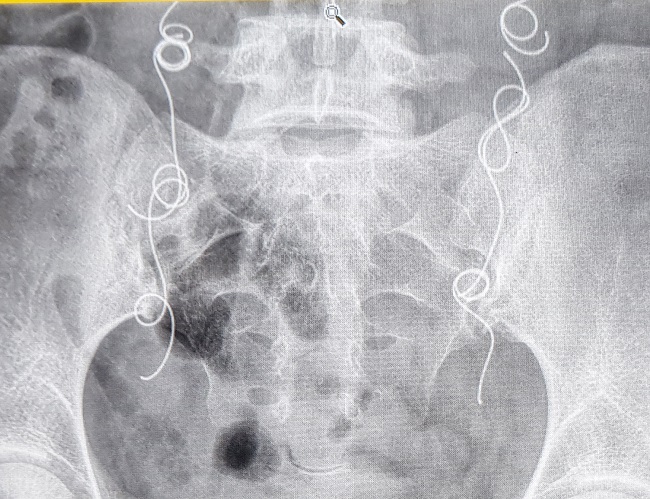
I drove 5 hours to see an interventional radiologist as there were none locally who could take me in the public system. I was advised by him that I should have platinum coils inserted in my ovarian veins and a foam solution to kill off a bunch of other veins. They thought the PVCS could be the cause to my pain and this treatment could prevent me from getting anymore varicose veins. He told me I am lucky that my legs and vagina hadn’t been affected yet, and that I will need to keep an eye out for this in the future.

Operation 8. I had operation number 8 in March 2017. I wasn’t under general anesthetic this time. Just a “twilight sedation” where they used my main artery in my neck to insert the coils and other treatments. Thankfully, I was out of it for most of it!! I had multiple coils inserted and who knows how many other smaller veins were treated. They wanted me to stay admitted overnight but I couldn’t do it. I was actually a bit traumatized from the whole experience. I felt extremely alone and scared down in a “big city” hospital by myself.  At one stage, they were so busy that the head of my bed was in a utility closet to get me out of the way. Unfortunately, this operation did not help my pain as much as I prayed it would. pelvic congestion hormonal birth control

Chemical Menopause, Hysterectomy, and More Medications

I was at my wits end. I was breaking down emotionally, so I reconsidered a hysterectomy even though I was only 23 years old. The gynecologist I was seeing suggested that I go into chemical menopause before I had a hysterectomy so that I could see if it would benefit my pain. So, I did, I went on an injection called Zoladex. It causes chemical menopause and it’s actually used as a treatment for breast and prostate cancer. I was told not to research it but I couldn’t help myself.

I went to a regular GP appointment, but this time came out with more bad news. The results were that I have high cholesterol, which showed in a recent blood test. The doctor was a little confused because I didn’t have any of the major risk factors for high cholesterol. Turns out, that is what chemical (surgical or natural) menopause can do to one’s body. Now I had to add another specialist to the list of doctors and it meant another trip away. He told me if you have a hysterectomy and you take out your only remaining ovary, your cholesterol treatment will greatly differ”. He told me, “what would/could happen and that I must go back after my operation, but for now it was still untreated.  So, with that news I felt like I needed to keep my only remaining ovary.

I was now seeing multiple professionals and had been seeing a gynecologist who made me regain hope. We talked about this operation multiple times over a long period of time and I was still suffering “chemical menopause” symptoms at that time, with my pain coming back worse the chemical menopause pellet started to run out. I was excited when the day finally came where I signed the papers to have a total hysterectomy. The advice I received was that I should make serious lifestyle changes to help my body. I was advised to do weight bearing exercises, quit smoking, go on Hormone Replacement Therapy and pray it doesn’t bring my pain back.

One thing that is still stuck in my mind is the line “this could take up to 10 years of your life”. I was in so much pain and I was sick of taking so much medicine that was making me sick in other ways. I really wanted to stop having operation after operation.

Operation 9. On the 2nd of August 2017, I had a total hysterectomy. I had everything except my right ovary removed. I must admit I felt strange, my belly felt empty, but I immediately felt like I had less pain.

It was the best thing I did for my pain. I felt like I had recovered from this operation fast and everyone (including myself) was amazed at how well I was doing physically afterwards. Ten days post op, I was able to stop all the pain medication I had been on! This was massive for me!!! No more pain killers! Or so I thought. My right ovary didn’t “wake up” after my hysterectomy and I began experiencing stronger menopause symptoms. I knew the obvious symptoms after having chemical menopause. This led me to the journey of figuring out and starting my first lot of Hormone Replacement Therapy (HRT). I also came to the realization that it takes up to one year to fully heal from a total hysterectomy.

I must admit this affected me mentally and emotionally more than I thought it would. Some days are so bad, they scare me, other days I’m on top of the world. I think this definitely contributed to my mental health. One of the hardest things about having mental illness is getting up and putting on ‘you’re okay face’ every day. This isn’t makeup. This is the face where you put on a smile and say, “I’m fine”, or “I’m good thanks”. Its where you hope no one sees past your bulls**t smile because the moment they do you know you’ll break down and cry, but at the same time you just want someone to help you and help you not feel the way you feel anymore. Who knew hormones can mess with your head so much? Who knew hormones play apart in so many different things in your body?

Operation 10. On the 28th of June 2018, surgery number 10 happened. I had my right ovary removed. I had another cyst that was complex in nature and which was making my pain worst, contributing to me being back on pain killers again full-time. They also saw that the coil that was cut during my hysterectomy was exposed at the tip, so they trimmed this up as well. hysterectomy at 23

Surgical Menopause: Medicine’s Only Other Solution

After this operation, I “officially” entered surgical menopause. I have learnt what surgical menopause really is, and how much it differs from natural menopause. I also learned how under-educated people are regarding this condition, including some doctors and specialist. I didn’t know this was the journey I was going to be on for the rest of my life, however, I have learned that I am my only and best advocate. I still suffer from chronic pain every day, and now I have an added stress of menopause. All I can do is stay strong and true to what I know and keep fighting for myself and women like me. I will continue to try and get better health care for myself and I will not give up until I am satisfied, I have achieved this. This is not how my story ends.

Thank you for taking the time to read my story. Kind Regards, Jessica Poland (Firth). Queensland, Australia.

Share Your Story

If you have had similar experiences with hormonal birth control and/or medications and surgery, write and share your story on Hormones Matter.

We Need Your Help

More people than ever are reading Hormones Matter, a testament to the need for independent voices in health and medicine. We are not funded and accept limited advertising. Unlike many health sites, we don’t force you to purchase a subscription. We believe health information should be open to all. If you read Hormones Matter, like it, please help support it. Contribute now.

Yes, I would like to support Hormones Matter. 

This article was published originally on November 29, 2021. 

Lupron Induced Osteoporosis?

16.7K views

Women who suffer with endometriosis do not have many options for treatment. As a result, many women try Lupron because they are desperate to be pain and symptom free. I was one of these women. In 2011 and 2013, I tried Lupron for a total of three doses and wish I knew then what I know now.

In 2010, I was diagnosed with endometriosis laparoscopically. After that, I tried everything from many different types of birth controls and pain medications to depression medications that can also be used to treat pain. Nothing worked. My doctor at the time suggested Lupron to me and I was desperate. I felt like I had already put my life on hold long enough because of this disease and just wanted to be out of pain. However, now I feel like I am suffering the consequences and it didn’t even get rid of my pain.

In 2015, I was diagnosed with osteoporosis. Prior to this, I had never had a bone scan done, not even before being administered Lupron. In 2009, I was diagnosed with Vitamin D deficiency and have been taking a supplement ever since. Three months before being diagnosed with osteoporosis, I stress fractured my knee and was told at my age, it should not have happened. In 2014, I had a hysterectomy because of endometriosis; I couldn’t take the pain anymore and had disease on both ovaries.

Before this, I had never had bone problems or been told that I could. I blame Lupron and strongly believe using it as a treatment for endometriosis led to me having osteoporosis. At 27 years old, I am still trying to work with doctors to determine if there are any treatments I can do because people my age having osteoporosis is rare. Many medications women use for osteoporosis could negatively impact my bones even more because of my age. If I don’t use any treatment, I could suffer from even more fractures or bone breaks the older I get. Right now, my average T-score for my left hip is -3.6 and was -3.3 when I was first diagnosed. I have no idea when my bones became so brittle. In my case, I wish I would have never tried Lupron as now I know this is one of the many side effects of this terrible treatment for endometriosis and something I will have to deal with for the rest of my life.

There are not studies done on medications for osteoporosis in my age group because there are not enough people with the disease to study. The medications my current doctor wants me to try would be a daily injection I would give myself in the abdomen for two years. They are known to possibly cause osteosarcoma, a bone cancer. Based on my history, I don’t like my odds. At this time, I don’t know how I will try to treat osteoporosis. I am planning on looking into natural ways of treating the disease and see how that goes.

As a result from my knee injury two years ago, I had to have an arthroscopic surgery. My doctor repaired my torn meniscus and removed scar tissue. It is taking me longer to heal than I anticipated and I wonder if it is because I have osteoporosis.

If doctors use Lupron for patients, they should be required to give these patients bone scans before their first dose and do follow ups yearly. It is a known fact that Lupron should not be administered in more than 12 doses over a patient’s LIFETIME. I wonder why this is?

I hope my story helps someone make a decision that is best for their body and raise awareness about Lupron. I am not a doctor, nor do I claim to be, but I am a patient that continues to live with the outcomes of having endometriosis.

We Need Your Help

More people than ever are reading Hormones Matter, a testament to the need for independent voices in health and medicine. We are not funded and accept limited advertising. Unlike many health sites, we don’t force you to purchase a subscription. We believe health information should be open to all. If you read Hormones Matter, like it, please help support it. Contribute now.

Yes, I would like to support Hormones Matter. 

Share Your Story

If you have experience with Lupron or other GnRH altering drugs, please share your story.

Image credit: Laboratoires Servier, CC BY-SA 3.0, via Wikimedia Commons.

This article was published originally on December 13, 2017. 

Shattering the Mirror: Becoming More Than the Reflection of a Disease

9.2K views

While writing a letter about myself to an online website recently, I found myself shocked and very much amused by the telling way I accidentally introduced myself. “Hello,” I began my letter, “my name is endometriosis and I am 29 years old.”

Endometriosis?!?” I giggled as I re-read what I mistakenly wrote, I had introduced myself as endometriosis?? Could there be a more obvious way of telling the world that endo defines me?  I suppose not. But who really needs a Freudian slip to guess that one?  Anyone with even a bit of insight could figure out the truth ten minutes after meeting me! And don’t you try to hide it – I’m sure it’s true for you too. Endometriosis consumes and defines the lives of all those who suffer from it.

But is that really true? Does endometriosis really have to infiltrate every part of our lives? Does it have to be the focal point of everything we do, or be the root of everything we feel about ourselves? My initial answer is an emphatic yes; there is no possible way to view our lives beyond the scope of endometriosis. But as I sit to muse about it longer, I begin to see another side.

You see, it’s not necessarily about seeing ourselves as something significant other than the endometriosis; it’s about viewing ourselves as significant despite the endometriosis.

I have been to many support groups for women with endometriosis. Each time I go I am amazed and inspired by the inner strength and beauty of these women. It is truly uplifting to sit and listen to what each of them has to say. To watch as one woman painfully and awkwardly attempts to sit down comfortably on a chair all the while saying something like, “But today is a great day, I only had to take two narcotic pills!!” Or to see another woman comfort a fellow endo-sister by genuinely telling her how strong and beautiful she is or how amazingly she handled a certain situation. I have firsthand experience of being comforted by another woman who was suffering with excruciating pain at the very moment that she held me in her arms to ease my pain. Time and time again I have seen the strength of women who could have legitimately decided to be selfish and angry but, instead, made the choice to be giving and kind.

So next time we look in the mirror and see a pathetic woman controlled by her endometriosis, let’s take a second look. We need to allow ourselves to see what we have become regardless of the fact that we have a terrible disease. Let’s look past the silhouette of a woman hunched over in agony and instead see the proud form of a strong, defiant woman whose illness will not define her; a woman who is powerful, kind, giving and beautiful whether or not she suffers. We are so much more than just a reflection of this disease.

About the author: RC is technically a special education teacher, specializing in working with children who have autism; or at least she was until endometriosis took over her life. Now she writes, blogs and tweets about endo while taking care of her miraculous two children that she has with her equally miraculous husband; not to brag or anything. RC is currently gathering stories from women with endo from around the world to put together into a book. You can share your story with her, or read her blog at Endo from the Heart.

Share Your Story

If you suffer from endometriosis, please share your story. Send us a note here for more details.

We Need Your Help

More people than ever are reading Hormones Matter, a testament to the need for independent voices in health and medicine. We are not funded and accept limited advertising. Unlike many health sites, we don’t force you to purchase a subscription. We believe health information should be open to all. If you read Hormones Matter, like it, please help support it. Contribute now.

Yes, I would like to support Hormones Matter. 

Image created using Canva AI.

This post was originally published in November of 2013. 

1 2 3 16